
The International Committee of the Red Cross has raised fresh concerns over the worsening humanitarian crisis in Nigeria’s North-East, revealing that more than two million people have been internally displaced by over a decade of armed conflict and violence in the region.
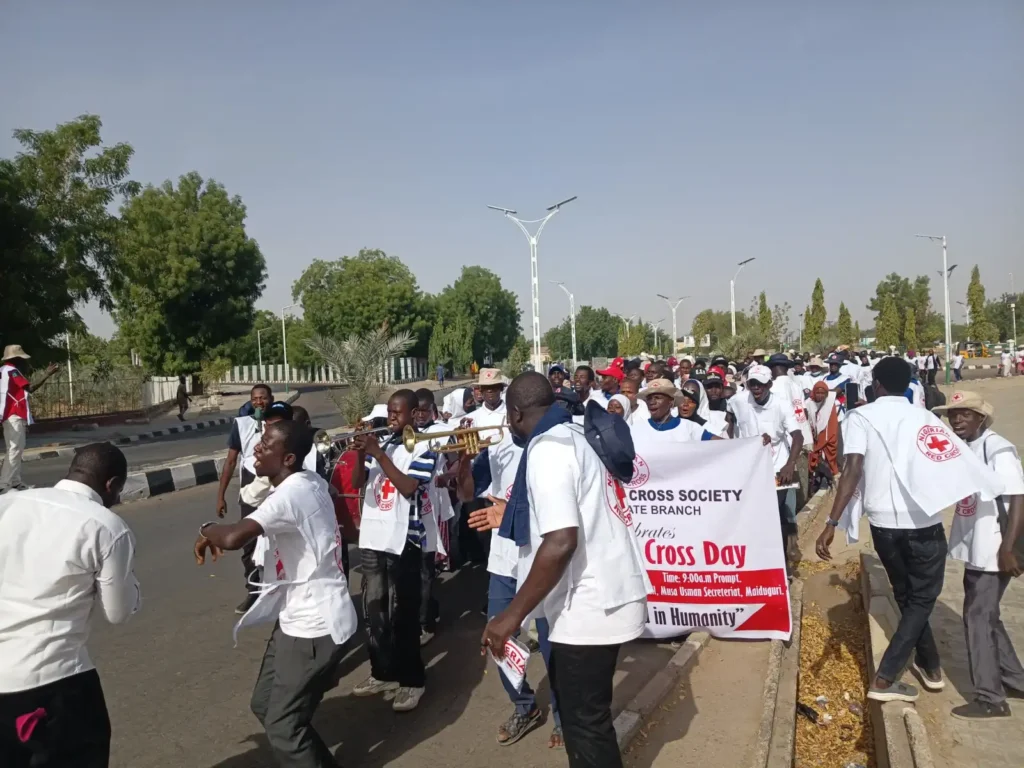
The disclosure was made by Dianna Japaridze during activities marking the 2026 World Red Cross Day in Maiduguri on Friday.
According to Japaridze, communities across the North-East continue to suffer the devastating impact of prolonged insecurity, with humanitarian needs increasing steadily as violence and displacement persist.
“Over two million people are being internally displaced, and the need for humanitarian assistance has been on the increase,” she said.
She noted that the ICRC has maintained humanitarian operations in Borno State since 2012, working closely with state authorities and the Nigerian Red Cross Society to support conflict-affected communities.
According to her, the organisation’s interventions span healthcare, water supply, livelihoods support, vocational training, and family tracing services for displaced persons separated by conflict.
Japaridze explained that across 13 local government areas in Borno State, the ICRC has supported health facilities with medical supplies, equipment, and training while also rehabilitating boreholes to improve access to clean water.
The humanitarian agency has also expanded agricultural and vocational support programmes aimed at helping vulnerable communities rebuild livelihoods affected by years of violence.
She added that the organisation continues to facilitate the restoration of family links for people separated during attacks and displacement while promoting respect for International Humanitarian Law and humanitarian principles.
Speaking on this year’s World Red Cross Day theme, “United in Humanity,” Japaridze described the occasion as a reminder of the importance of compassion, dignity, and solidarity during crises.
She praised volunteers and humanitarian workers for operating under difficult conditions to provide life-saving assistance to affected populations.
“Every day, volunteers and staff of the International Red Cross and Red Crescent Movement support people affected by conflict, disaster, displacement, and crisis — restoring hope, comfort, and dignity alongside life-saving assistance,” she said.
Japaridze also commended the dedication of staff and volunteers of both the Nigerian Red Cross Society and the ICRC in Borno State for their continued service despite growing challenges.
The event featured a road walk by members of the Nigerian Red Cross Society from the organisation’s Wulari branch office to the Musa Usman Secretariat International Conference Hall in Maiduguri.
Nigeria’s North-East has remained one of the country’s most affected regions by insurgency and communal violence, with millions displaced and thousands dependent on humanitarian assistance for survival.