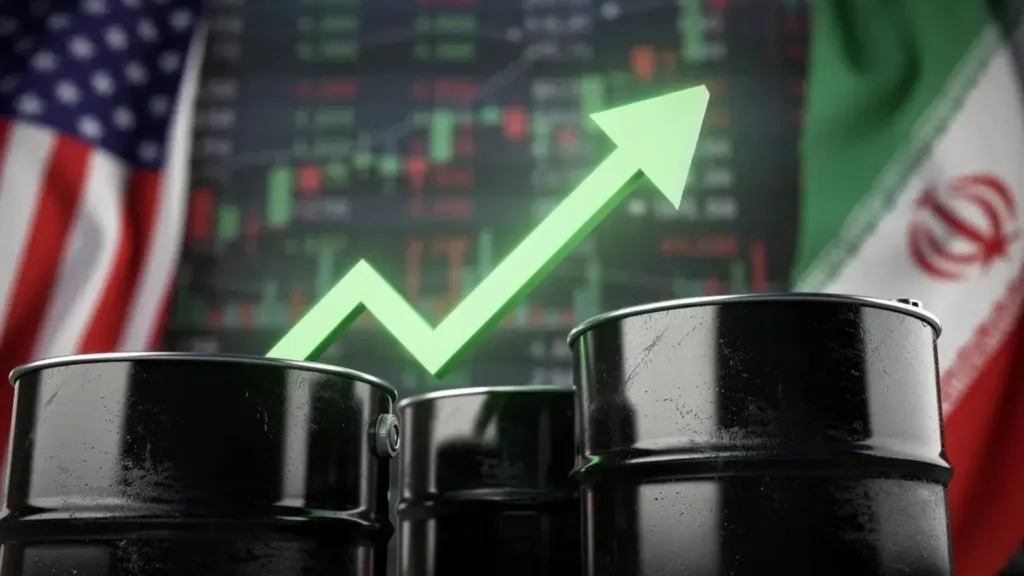
Global oil prices climbed sharply to $108 per barrel on Thursday after Iran rejected a US-backed peace proposal aimed at ending the ongoing conflict involving Israel, raising fresh concerns over supply disruptions.
The nearly 6 per cent spike in crude prices followed Tehran’s dismissal of a 15-point plan put forward by Donald Trump, which Iranian officials described as “one-sided” and skewed in favour of the United States and Israel.
Tensions Rattle Global Energy Markets
The latest surge reverses a brief dip earlier in the week, when oil prices fell from $103 to $98 per barrel after Washington hinted at possible negotiations with Iran.
However, hopes of de-escalation faded quickly after Tehran rejected the proposal, fuelling uncertainty in global energy markets already sensitive to developments in the Middle East.
A senior Iranian official said the proposal failed to meet “minimum requirements” for meaningful dialogue but noted that diplomacy had not been completely ruled out.
Strait of Hormuz at Centre of Dispute
A key sticking point remains Iran’s insistence on maintaining control over the strategic Strait of Hormuz — a critical global oil shipping route.
Tehran described its authority over the waterway as a “natural and legal right,” pushing back against US demands that include curbing its nuclear programme, limiting missile capabilities, and relinquishing influence over the strait.
War Pushes Fuel Prices Higher in Nigeria
The ripple effects of the conflict are already being felt in Nigeria, where petrol prices remain elevated.
NNPC Limited is currently selling fuel at about ₦1,261 per litre in Abuja, while private marketers are dispensing at around ₦1,371 per litre — significantly higher than pre-crisis levels of ₦860 to ₦880 per litre.
Diplomatic Standoff Intensifies
Despite backchannel communications, Iran has expressed reluctance to engage with key US negotiators, reportedly rejecting talks involving envoy Steve Witkoff and Jared Kushner.
Instead, Tehran is said to favour engagement with Vice President J.D. Vance, viewed as a more cautious voice on US military involvement in the region.
Meanwhile, Trump has maintained a hardline stance, urging Iran to “get serious” about negotiations while insisting he is not desperate for a deal.
Rising Risks for Global Economy
Analysts warn that prolonged tensions could further disrupt oil supply chains, particularly if instability affects the Strait of Hormuz, through which a significant portion of the world’s oil passes.
With both sides holding firm positions and military actions continuing, fears are mounting that the crisis could escalate further — keeping oil prices volatile and adding pressure to already strained global economies.