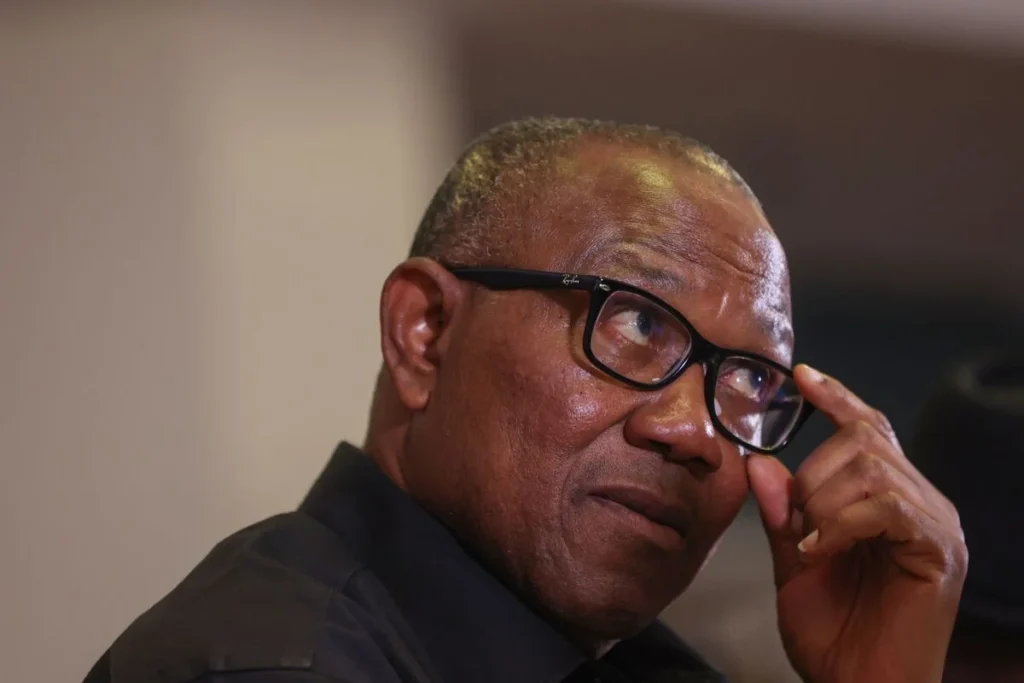
Former presidential candidate of the Labour Party, Peter Obi, has condemned the recent public confrontation between the Nyesom Wike-led Ministry of the Federal Capital Territory (FCT) and a naval officer in Abuja, describing the episode as “a national embarrassment” and a symptom of Nigeria’s deepening governance crisis.
In a statement posted Wednesday on his X account, Obi said the incident—which involved Wike clashing with uniformed personnel while attempting to access a parcel of land in the Gaduwa district—should have been handled routinely, but instead spiralled into an avoidable spectacle.
The fracas erupted when Wike and his entourage were prevented by soldiers from entering the disputed land. The minister accused former Chief of Naval Staff, Awwal Zubairu Gambo (rtd), of deploying military forces to shield an alleged illegal development.
Obi’s message goes beyond the personal dispute. He used the confrontation to raise fundamental questions about civil‐military boundaries, respect for institutional processes and the rule of law in Nigeria. He asked: Should the military ever be used for purely civil tasks? Are ministers free to bypass procedure and intervene directly in such matters? What example does this conduct set for young Nigerians regarding leadership, discipline and respect for institutions?
“For a matter that should have been handled by proper agencies, what we witnessed instead was a public spectacle,” Obi wrote. “When public officials act beyond institutional norms, and when security agencies are used in ways that blur professional boundaries, we weaken both governance and public trust.”
Also Read: Mohammed Badaru Reaffirms Protection for Military Officers Amid Wike Clash
He concluded by calling for a shift away from a culture of impunity toward one of law, order and due process. “A country that aspires to greatness and feels insulted when referred to as a ‘disgraced nation’ must replace the culture of impunity with the discipline of law, order and respect for due process.”
Obi further urged that public office must be exercised with humility and character: “To occupy an office and be referred to as His Excellency, Distinguished or Honourable, our conduct must reflect those titles in all ramifications.”