
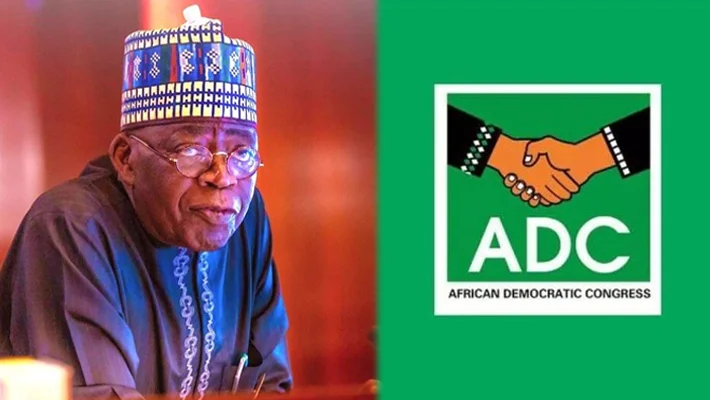
The African Democratic Congress (ADC) has accused the ruling All Progressives Congress (APC) of being intolerant to criticism and failing to demonstrate effective leadership in addressing the country’s challenges.
Speaking on Channels Television’s Politics Today, the National Publicity Secretary of the ADC, Bolaji Abdullahi, said the APC-led government has consistently mistaken constructive criticism for personal attacks, describing such behavior as a mark of “historical incompetence.”
His remarks came in response to the recent statement by former U.S. President Donald Trump, who reportedly classified Nigeria as a “Country of Particular Concern” (CPC) over allegations of Christian persecution. Trump also hinted that he had directed the U.S. Department of Defense to prepare for possible military intervention should the Nigerian government fail to protect religious minorities.
Abdullahi, however, clarified that neither the ADC nor Nigerians at large are accusing the Federal Government of religious persecution.
He explained that the issue should not be viewed as political opportunism but rather as a wake-up call for Nigeria’s leaders to take responsibility for the worsening insecurity across the nation.
“Nobody is saying this government is persecuting Christians or engaging in religious bias. That’s not the point,” Abdullahi said. “The real issue is that the APC thinks every form of criticism is an attack on them. This defensiveness only exposes their historical incompetence.”
The ADC spokesperson lamented that the government’s failure to address insecurity has left the nation vulnerable to negative international perceptions.
You May Like: Yemi Alade Opens Up on Why a Collaboration With Tiwa Savage May Never Happen
“It’s embarrassing as Nigerians to see outsiders describing our security situation in divisive religious terms,” he added. “We should be leading the narrative, not allowing others to define us this way.”
Abdullahi urged the Federal Government to move beyond defensiveness and take decisive steps toward uniting the country and restoring public confidence in its ability to govern effectively.