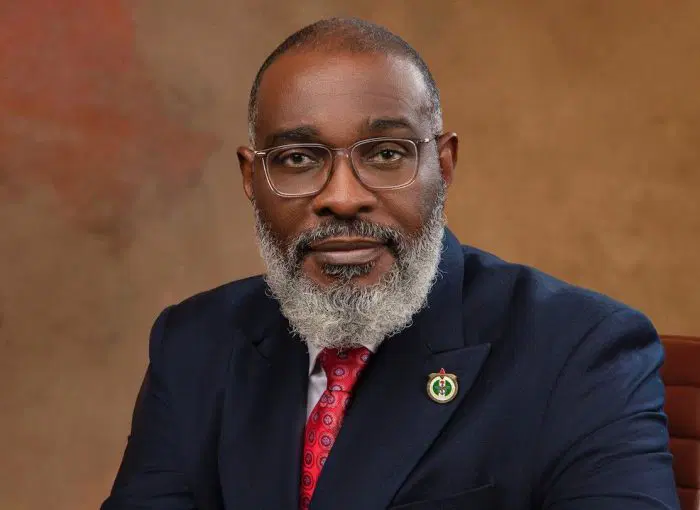
President Bola Ahmed Tinubu has created the position of Special Adviser on Homeland Security, appointing retired Major General Adeyinka Famadewa as the pioneer occupant of the newly established office.
The appointment, announced on Monday through a statement issued by the Office of the Secretary to the Government of the Federation (OSGF), marks the first time a Nigerian president has introduced a dedicated homeland security advisory role at the federal level.
The statement, signed by Secretary to the Government of the Federation George Akume and conveyed through the Permanent Secretary of the General Services Office, Ibrahim Abubakar Kana, said the move reflects the administration’s determination to strengthen internal security coordination and intelligence-led operations across the country.
According to the presidency, the creation of the office is aimed at enhancing inter-agency collaboration, improving intelligence integration and reinforcing proactive responses to emerging security threats nationwide.
The development signals a significant shift in Nigeria’s security architecture, which has traditionally concentrated strategic advisory responsibilities within the Office of the National Security Adviser (ONSA).
Famadewa, who brings more than three decades of military and intelligence experience to the role, is widely regarded for his contributions to national security strategy, counter-terrorism operations and intelligence coordination.
One of his most notable assignments was serving as Principal General Staff Officer to the National Security Adviser between 2015 and 2021, where he spearheaded the establishment of the Intelligence Fusion Centre — a multi-agency intelligence platform designed to improve threat assessment and coordination among Nigeria’s security institutions.
The centre integrated operations involving the Defence Intelligence Agency, National Intelligence Agency, Department of State Services, the Nigeria Police Force and the Armed Forces.
Following his retirement from active military service, Famadewa joined the Nigerian Army Resource Centre in Abuja as a Senior Research Fellow, contributing to policy development on policing, civil-security cooperation and national security reform.
He is also the author of the widely referenced monograph, Policing and National Security in Nigeria, which focuses on practical frameworks for strengthening collaboration between security agencies and civilian institutions.
President Tinubu expressed confidence that the appointment would enhance coordination of homeland security initiatives and intelligence-driven risk management, while advancing the administration’s Renewed Hope Agenda.