
Saturday, 21 MarchWeather Icon17.71°C

March 21, 2026

Entertainment, Fitness, Health, Lifestyle, News, Photo, Sports, Trending

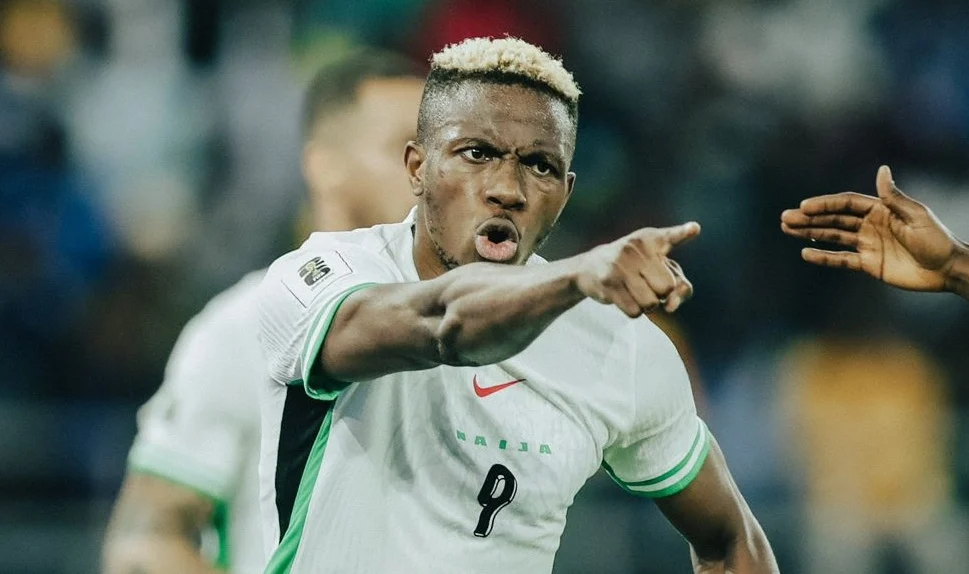
Osimhen Recalls Early Super Eagles Snub, Praises Iheanacho’s Support

Super Eagles striker Victor Osimhen has shared a personal story from his early days in the national team, revealing how a senior player once turned him away from a teammate’s hotel room during his first call-up in 2017.

Speaking during a livestream with comedian Carter Efe, the Galatasaray forward recounted the incident, which occurred when he tried to visit fellow Nigerian international Kelechi Iheanacho.

A Humbling First Experience

According to Osimhen, he had approached Iheanacho’s room out of respect for the then Manchester City striker, even offering to help carry his boots.

However, he was stopped at the door by Iheanacho’s roommate—whom he declined to name—who refused him entry.

“I knocked and the roommate opened the door and bounced me,” Osimhen recalled, describing the moment as a humbling experience during his early days with the Super Eagles.

Iheanacho Steps In

Osimhen said Iheanacho later intervened after learning what had happened, expressing displeasure and personally welcoming him into the room.

“He was angry and asked why someone who came to see him was being chased away. He took me inside,” Osimhen said.

From Rookie to Star

The incident dates back to 2017, when Osimhen was still finding his footing in the national team setup. Since then, he has risen to become one of Africa’s top strikers, earning global recognition for his performances in Europe.

The 25-year-old is currently in Nigeria recovering from a broken arm sustained during a UEFA Champions League clash involving Galatasaray.

His story offers a glimpse into the challenges young players often face breaking into elite squads—and the impact of mentorship and support from senior teammates.

Lifestyle, News, Technology, Travel, Trending

Kenya, Uganda Presidents Meet to Advance Multi-Billion Dollar Railway Link

The presidents of Kenya and Uganda are set to meet near their shared border to advance plans for the long-delayed extension of the Standard Gauge Railway (SGR), a flagship infrastructure project seen as critical to regional trade.

William Ruto is expected to hold talks with his Ugandan counterpart, Yoweri Museveni, in Kisumu as both leaders push to revive momentum on the cross-border rail link.

Reviving a Stalled Mega Project

The Chinese-built SGR, constructed between 2013 and 2019, currently connects the port city of Mombasa to Nairobi and extends to Naivasha. However, plans to continue the line into Uganda stalled after China declined further financing.

Despite the setback, Kenya has pressed ahead with the project, viewing it as key to unlocking trade corridors across East and Central Africa.

Debt Concerns Loom Large

The railway has come under scrutiny due to its heavy financial burden. Kenya reportedly spends about $1 billion annually servicing Chinese loans—most of which were used to fund the SGR.

This far exceeds the railway’s annual revenue, which stood at roughly $165 million last year, even as passenger and cargo volumes continue to rise.

A report by the Auditor-General also flagged over $260 million lost to penalties and interest linked to delayed debt repayments, intensifying concerns about the project’s long-term viability.

New Financing Strategy

In a shift from earlier funding models, Kenya is no longer relying on fresh Chinese loans for the extension. Instead, authorities are exploring alternative financing, including borrowing against future cargo levies, while still partnering with Chinese firms for construction.

The next phase of the railway, launched by Ruto in Narok County, is expected to reach Kisumu and eventually extend to Malaba on the Kenya-Uganda border by 2027.

The overall cost of the extension is estimated at more than 500 billion Kenyan shillings (approximately $3.9 billion).

Boosting Regional Trade

Kenya views the railway expansion as a strategic investment to position itself as a leading logistics hub in East and Central Africa.

Once completed, the line is expected to link landlocked countries such as Uganda, Rwanda, South Sudan, and the mineral-rich Democratic Republic of Congo to the Kenyan coast, significantly reducing transport costs and transit times.

Ruto has defended the project, insisting it will “catalyse regional economic growth,” create jobs, and ease pressure on road networks.

The meeting between the two leaders signals renewed political will to complete the cross-border rail link, despite ongoing financial and logistical challenges.

Scroll to Top
site logo

Gym

Join our newsletter channel