

Wednesday, 11 MarchWeather Icon17.41°C

March 11, 2026

Business, Feature, News, Politics

Fubara Swears in Five Commissioners, Urges Dedication After ‘Rigorous’ Screening

The Governor of Rivers State, Siminalayi Fubara, has sworn in the first batch of five commissioners and urged them to serve the state with dedication, following what he described as a rigorous screening process by the state legislature.

The swearing-in ceremony took place on Wednesday at the Government House in Port Harcourt, days after the nominees were cleared by the Rivers State House of Assembly.

Speaking during the ceremony, Governor Fubara said the screening exercise conducted by the lawmakers had already prepared the commissioners for the responsibilities ahead, adding that they were now fully equipped to contribute to governance as members of the State Executive Council.

“I believe that having gone through one of the most rigorous screenings, it is enough to say that those of you who succeeded are fit and ready to deliver for our dear state,” the governor said. “The screening itself was the charge, and I expect nothing less than your best in service.”

The five commissioners sworn in are Tonye Bellgam, Prof. Temple Nwofor, Dr. Peters Nwagor, Lekue Kenneth, and Sir Amairigha Edward Hart.

The Oath of Allegiance and Oath of Office were administered by the Chief Registrar of the Rivers State High Court, David D. Ihua-Maduenyi.

Earlier in the week, the Rivers State House of Assembly, led by Speaker Martin Amaewhule, screened nine commissioner-nominees submitted by the governor but approved only five.

Lawmakers rejected four nominees over issues including poor performance during the screening and inconsistencies in their documentation, while one of the candidates was dropped following petitions from members of his community.

Government sources indicate that Governor Fubara is expected to submit a fresh list of commissioner nominees to the Assembly in the coming days, as the state works to fill positions in its executive council across its 23 local government areas.

The development comes weeks after the governor relieved eight commissioners of their duties, although none of them has been renominated so far.
Feature, News, Photo, Trending

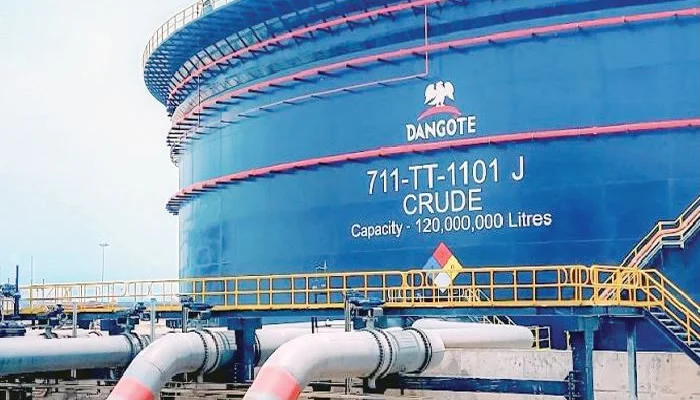
Dangote Refinery Dominates Petrol Supply as Nigeria Halts Imports


Nigeria’s fuel supply landscape is undergoing a major shift as domestic refining—led by the Dangote Refinery—now accounts for about 92 percent of the country’s petrol supply, following the Federal Government’s decision to halt import licences in 2026.

Officials at the Nigerian Midstream and Downstream Petroleum Regulatory Authority (NMDPRA) confirmed that no petrol import licences have been issued this year, citing sufficient local production to meet national demand.

“It’s correct that we’ve not issued import licences this year. Local production has met national requirements, so there’s no need for importation,” a senior official at the regulator said.

Domestic refining overtakes imports

According to the regulator’s February 2026 fact sheet, domestic refineries supplied 36.5 million litres of petrol per day, while imports contributed just three million litres daily.

This pushed total national supply for the month to 39.5 million litres per day, with local refining accounting for roughly 92 percent of the total—a sharp departure from Nigeria’s long-standing dependence on imported fuel.

The figures also show that petrol imports plunged by nearly 88 percent, dropping from 24.8 million litres per day in January to just three million litres in February.

Currently, the Dangote facility remains the only refinery producing petrol, as most modular refineries focus on refining crude into diesel.

Supply drops as imports decline

Despite the surge in domestic refining, overall petrol supply declined significantly in February due to the steep drop in imports.

The NMDPRA said total supply fell by 25.4 million litres per day compared with January’s 64.9 million litres daily.

Historically, imports have played a dominant role in Nigeria’s petrol market. For example, in December 2025, petrol imports averaged 42.2 million litres per day, compared with 32 million litres from domestic refineries, bringing total supply to 74.2 million litres daily.

Dangote refinery ramps up production

The refinery, owned by Aliko Dangote, has significantly expanded its output in recent months and says it has reached its full processing capacity of 650,000 barrels per day, supplying more than 50 million litres of petrol daily to the domestic market.

The surge in local refining is expected to reduce Nigeria’s foreign exchange demand for fuel imports and reshape the country’s downstream petroleum sector.

However, some industry stakeholders have raised concerns that the dominance of a single refinery could create monopolistic pressures in the market.

Petrol prices remain high at filling stations

Meanwhile, the refinery recently reduced its petrol gantry price by ₦100, cutting the rate from ₦1,175 to ₦1,075 per litre.

Despite the reduction, pump prices at filling stations across Lagos, Ogun State and the Federal Capital Territory remained largely unchanged, with many outlets still selling petrol between ₦1,200 and ₦1,330 per litre.

Market analysts attribute the recent volatility in fuel prices to fluctuations in global crude oil prices, which have been affected by tensions in the Middle East.

Industry groups such as the Independent Petroleum Marketers Association of Nigeria say petrol prices could stabilise once global crude prices decline further.

Scroll to Top
site logo

Gym

Join our newsletter channel