
Wednesday, 25 FebruaryWeather Icon8.43°C

February 25, 2026

Design, Feature, News, Photo, Politics

Kwara State Moves to End FGM, Reviews 2026–2030 Action Plan

The Kwara State Government has reaffirmed its commitment to ending Female Genital Mutilation (FGM), calling for stronger collaboration across sectors as it reviews its 2026–2030 action plan to eliminate the harmful practice.

The renewed push was announced during a stakeholders’ meeting in Ilorin, where the Commissioner for Women Affairs, Opeyemi Oluwakemi Afolashade, stressed the need for a coordinated, multi-sectoral approach.

Represented by Rasheed Ubandawaki, the commissioner said the fight against FGM requires collective responsibility beyond government efforts.

“This fight cannot be left to government alone. Traditional rulers, religious leaders, civil society organisations, law enforcement agencies, and communities must all be involved,” she said.

Government strengthens legal and advocacy efforts

Afolashade highlighted ongoing enforcement of key legal frameworks, including the Violence Against Persons (Prohibition) Act and the Child Rights Law, aimed at protecting women and children from abuse.

She noted that the state has intensified advocacy campaigns, engaging first-class traditional rulers across the three senatorial districts, appointing anti-FGM champions, and securing commitments through signed pledges.

Grassroots sensitisation efforts have also expanded to schools, religious institutions, and market associations, particularly within Ilorin metropolis, to discourage the practice and protect the girl-child.

Stakeholders call for data-driven interventions

At the meeting, public health officials and rights advocates emphasised the need for accurate data to effectively combat FGM.

The Director of Public Health, Oluwatosin Fakayode, represented by Buhari Oladimeji, called for a comprehensive survey to identify practitioners across all 16 local government areas.

Similarly, National Human Rights Commission state director, Jumoke Olaoye, said awareness campaigns have been intensified, including community sensitisation and promotion of legal protections.

Challenges in enforcement

Despite progress, legal experts pointed to persistent challenges in prosecuting offenders. Barrister Funke Balogun noted that family interference often undermines cases, discouraging victims and weakening the justice process.

She also called for economic alternatives for practitioners to discourage reliance on FGM as a source of livelihood.

Next steps

The state government plans to convene an FGM convention to mark the International Day of Zero Tolerance for FGM, as part of broader efforts to mobilise stakeholders and strengthen enforcement.

FGM, which involves the partial or total removal of female genitalia for non-medical reasons, is widely recognised as a violation of the fundamental rights, health, and dignity of women and girls.

With renewed policy direction and stakeholder engagement, Kwara aims to accelerate progress toward eliminating the practice and safeguarding the future of the girl-child.
Feature, News, Photo, Trending

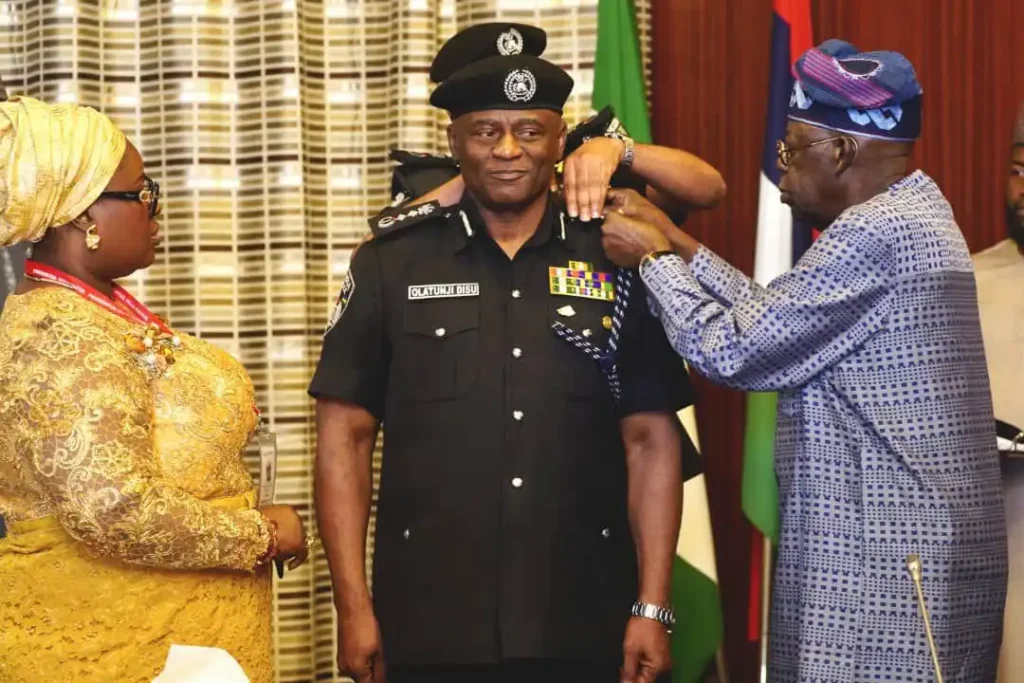
BREAKING: Bola Ahmed Tinubu Decorates Olatunji Disu as Acting IGP

President Bola Ahmed Tinubu has officially decorated Olatunji Disu as the Acting Inspector-General of Police at a ceremony held at the State House in Abuja on Wednesday.

The event, which took place at the President’s office around 4pm, was attended by top government officials, including National Security Adviser Nuhu Ribadu, Chief of Staff Femi Gbajabiamila, Secretary to the Government of the Federation George Akume, and the outgoing IGP, Kayode Egbetokun.

Appointment amid leadership transition

Disu’s elevation comes just 48 days before his scheduled retirement on April 13, 2026, when he turns 60. However, under provisions of the amended Police Act, an Inspector-General of Police can serve a fixed four-year tenure, potentially allowing him to remain in office until 2030.

President Tinubu, while decorating the new police chief, commended Egbetokun for his service, following his resignation earlier this week. According to a statement by presidential spokesman Bayo Onanuga, the former IGP stepped down due to personal reasons requiring his full attention.

Disu will serve in an acting capacity pending confirmation by the Nigeria Police Council, after which his name will be forwarded to the Senate for approval.

Implications for police leadership

His appointment is expected to trigger a significant shake-up within the Nigeria Police Force hierarchy. Senior officers, particularly Deputy Inspectors-General (DIGs) who are his seniors, may be required to retire in line with established tradition.

Sources indicate that between 15 and 20 senior officers, including several DIGs at Force Headquarters, could be affected by the transition.

Profile of the new Acting IGP

Born on April 13, 1966, in Lagos, Disu joined the Nigeria Police Force in 1992 and has built a career spanning over three decades across intelligence, operations, and command roles.

He gained national recognition as Commander of the Rapid Response Squad (RRS) in Lagos, where he rebranded the unit as “The Good Guys” and led it to win the Best Anti-Crime Squad award in West Africa in 2016.

Disu later headed the Intelligence Response Team, one of the police’s most critical investigative units, and served as Commissioner of Police in both Rivers State and the Federal Capital Territory.

Before his appointment, he was Assistant Inspector-General of Police in charge of the Force Criminal Investigation Department (FCID) Annex in Lagos.

Next steps

The new Acting IGP is expected to formally assume office at the Force Headquarters, Abuja, where a handover ceremony and parade of senior officers will take place.

His appointment marks a pivotal moment in Nigeria’s policing leadership, with expectations high for reforms, improved security operations, and institutional stability within the force.

Scroll to Top
site logo

Gym

Join our newsletter channel