Wednesday, 7 JanuaryWeather Icon8.23°C

December 22, 2025

Education, News, Trending

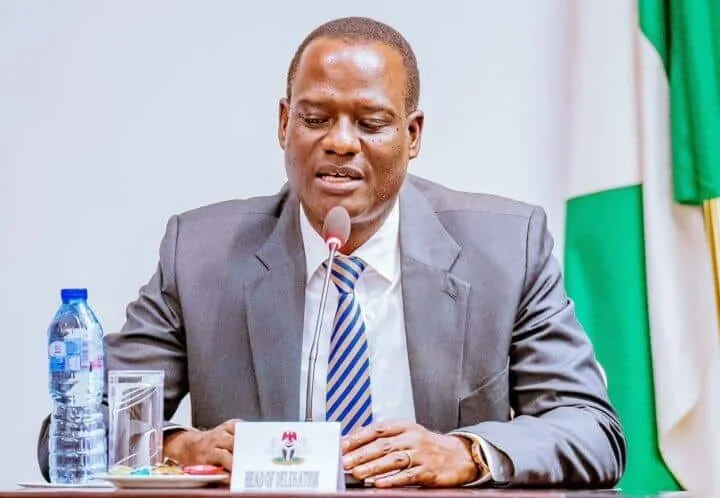
FG Disburses ₦150bn to 788,000 Students Under NELFUND — Idris

The Federal Government has disclosed that more than ₦150 billion has so far been disbursed to about 788,000 Nigerian students under the Nigeria Education Loan Fund (NELFUND), marking a major milestone in the country’s education financing efforts.

The Minister of Information and National Orientation, Alhaji Mohammed Idris, made this known on Monday in Abuja during an end-of-year media briefing, where he highlighted what he described as key policy gains recorded under President Bola Tinubu’s administration.

According to Idris, the education sector emerged as one of the biggest beneficiaries of the government’s reform agenda, with 2025 delivering impactful policies aimed at empowering young Nigerians and expanding access to higher education.

He explained that the student loan initiative has significantly reduced financial barriers for students from low-income households, allowing them to pursue tertiary education without the burden of upfront tuition costs.

“So far, over 788,000 students have accessed interest-free loans and stipends through NELFUND, with total disbursements exceeding ₦150 billion,” the minister said, noting that the figure continues to rise as more applications are processed.

Beyond student loans, Idris revealed that the Federal Government introduced several youth-centered programmes during the year to stimulate innovation, entrepreneurship, and skills development.

One of such initiatives is the Investment in Digital and Creative Enterprises (iDICE) programme, which officially commenced in 2025. The programme is backed by a multi-million-dollar venture fund aimed at supporting young Nigerians pursuing opportunities in the creative and digital economy.

In addition, the government launched the Student Venture Capital Grant (S-VCG) to encourage innovation within tertiary institutions. Idris explained that the scheme provides equity-free funding of up to ₦50 million to undergraduate innovators studying Science, Technology, Engineering, Mathematics and Medicine (STEMM) in accredited institutions nationwide.

He said the initiative is designed to turn university campuses into hubs of innovation, producing job creators rather than job seekers.

The minister also highlighted progress made under the Three Million Technical Talent (3MTT) programme, which forms part of the administration’s strategy to build a digitally skilled workforce capable of competing on a global scale.

NELFUND was created to manage the Nigeria Student Loan Scheme, which President Tinubu signed into law in April 2024. The programme offers interest-free loans to students enrolled in public tertiary institutions, covering tuition and living expenses.

You May Like: Jay-Jay Okocha Says Current Super Eagles Can’t Match Nigeria’s 1996 Olympic Dream Team

Applications for the scheme began in May 2024, with repayment scheduled to commence after beneficiaries complete their studies and secure employment—an approach the government says will ensure the long-term sustainability of the fund.
News, Politics, Trending

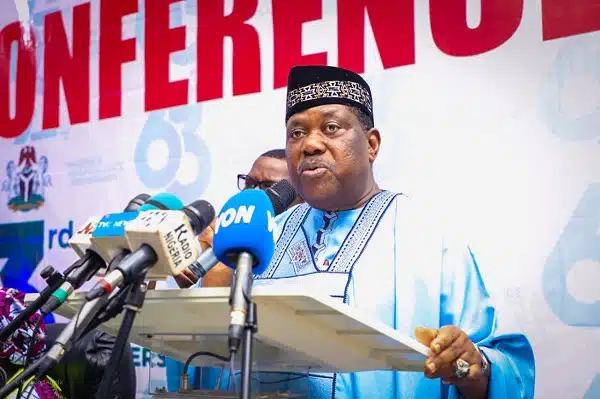
FG Makes Drug Testing Compulsory for Federal Government Job Applicants

The Federal Government under President Bola Ahmed Tinubu has announced a new policy mandating drug tests for individuals seeking employment within Nigeria’s public service.

According to reports, the directive forms part of broader efforts to curb the growing problem of substance abuse and its negative effects on national productivity, public safety, and security.

The policy was conveyed through a service-wide circular issued on Monday by the Office of the Secretary to the Government of the Federation (OSGF). The circular instructs Permanent Secretaries, heads of Ministries, Departments and Agencies (MDAs), as well as extra-ministerial bodies and parastatals, to include compulsory drug screening as a requirement during recruitment exercises.

To ensure proper implementation, all MDAs are required to collaborate with the National Drug Law Enforcement Agency (NDLEA), which will oversee and conduct the tests in line with approved procedures and standards.

The government cited the increasing rate of drug abuse—especially among young people—as a major concern, warning that it poses serious risks to public health, economic growth, workplace efficiency, and national security.

The circular, signed by the Director of Information and Public Relations at the OSGF, Segun Imohiosen, reaffirmed the administration’s determination to maintain a disciplined and drug-free public workforce.

Also Read: Jay-Jay Okocha Says Current Super Eagles Can’t Match Nigeria’s 1996 Olympic Dream Team

The new recruitment requirement is consistent with the government’s wider anti-drug campaign, which has recently seen similar testing policies introduced in tertiary institutions and other sectors of society.

News, Politics, Trending

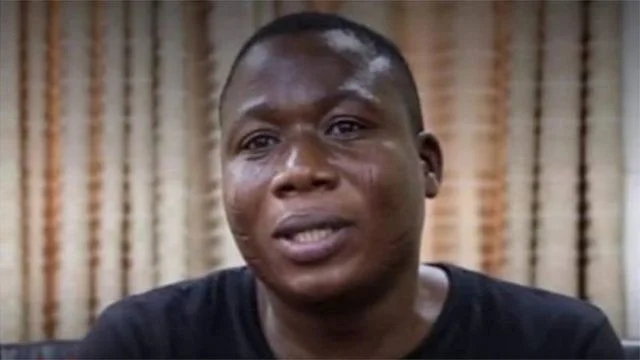
Sunday Igboho Urges President Tinubu to Act as Oyo Farmers Killed by Suspected Herdsmen

Yoruba nation activist, Sunday Adeyemo, widely known as Sunday Igboho, has appealed to President Bola Tinubu to urgently address the rising insecurity in rural areas across Oyo State and the broader South West region.

Igboho’s statement, released on Monday, comes in the wake of the tragic deaths of three farmers—Aderoju Mukaila, Olawuwo Saka, and Ojeniyi Ojebayo—who were reportedly attacked by suspected Fulani herdsmen while trying to protect their farms from grazing cattle. Despite being rushed to a hospital, the victims later died from their injuries.

Reacting to the incident, Igboho warned that the government’s inaction could escalate tensions and lead to broader conflicts. “On Sunday, three innocent people were killed in my hometown of Igboho. This is exactly what I have been warning the authorities about for years. Nothing has changed, and our people continue to suffer attacks while the perpetrators move freely,” he said.

The activist urged the government and security agencies to take more decisive action to safeguard lives and property, particularly in the Oke-Ogun region, where rural communities have faced persistent attacks. “The authorities must do more to protect residents in Igboho and neighbouring villages. Insecurity has become a daily reality here,” he added.

Highlighting the wider issue of criminal activities in the South West, Igboho expressed concern about the growing menace of rogue herders, bandits, and other criminal elements infiltrating rural settlements and forests, including parts of Kwara and Kogi states. He stressed the need for the Federal Government, under President Tinubu, to implement effective security strategies to curb these deadly attacks.

“The victims and their families are living in despair. Their tolerance has been stretched to the limit. The government and security agencies must act decisively before residents feel forced to take matters into their own hands,” Igboho warned.

He further called for swift justice, insisting that those responsible for the killings be arrested and prosecuted. “Hoodlums and other non-state actors committing violent crimes against helpless farmers and villagers must face the full weight of the law,” he said.

You May Like: Pastor Chris Okafor Responds to Doris Ogala Allegations, Urges Legal Process to Prevail

Igboho concluded by emphasizing the importance of proactive intelligence and preventative measures, urging security agencies to act before attacks occur to protect communities and prevent further loss of life.

Entertainment, News, Trending

Pastor Chris Okafor Responds to Doris Ogala Allegations, Urges Legal Process to Prevail

Pastor Chris Okafor, founder of Grace Nation Bible Ministry, has spoken out amidst the swirling controversy involving actress Doris Ogala, emphasizing that any allegations against him must be substantiated in court.

Okafor made the remarks on Sunday during his marriage thanksgiving service, addressing the issue indirectly amid widespread social media discussion. The controversy follows the arrest of Doris Ogala at her residence on Saturday, December 20, 2025, after she publicly accused Okafor of failing to fulfill a marriage promise.

During his sermon, Okafor explained that his earlier silence was guided by divine instruction and a sense of prudence. He acknowledged that being misrepresented is painful but said he chose not to engage publicly with the claims.

“Though it can be painful to be misrepresented for what you are not, we leave it there for now. Thanks be unto the Lord,” he stated.

The pastor also suggested that responding directly to detractors could unintentionally glorify them. “We will never dignify a mad devil by replying. That would amount to glorifying the devil,” he remarked.

Okafor spoke about the personal nature of his relationship with God, asserting that it remains unshaken by public opinion. “Since I grew up, I have known this man as my father, and nobody can tell me anything about Him. I know Him, and no outsider knows Him better than I do,” he said.

He further urged his congregation to respect the ongoing legal process. “There’s a law in this country that works, and we follow it. Everything you say must be proven in court. We are not silent; we are praying and following the right path. The truth will come out,” he emphasized.

Hinting at undisclosed aspects of the case, Okafor revealed that certain details cannot be made public due to the ongoing investigation. “There are reports that will surprise you about people involved behind the scenes. But because the authorities are handling the matter, I cannot discuss it publicly. I will not jeopardize the investigation or the legal process,” he added.

Also Read: Why I Spoke About Christian Persecution In Nigeria – Nicki Minaj

Reiterating a key legal principle, the pastor concluded, “He that alleges must prove.”

News, Sports, Trending

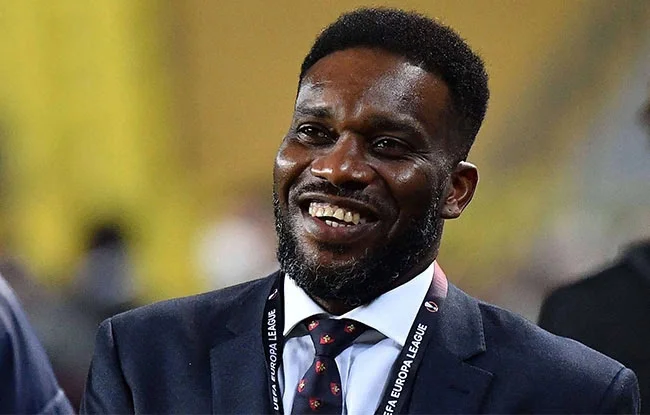
Jay-Jay Okocha Says Current Super Eagles Can’t Match Nigeria’s 1996 Olympic Dream Team

Nigerian football icon Austin “Jay-Jay” Okocha has delivered a blunt verdict on the current Super Eagles, insisting they fall far short of the legendary team that captured Olympic gold in 1996.

Speaking with trademark confidence, Okocha—one of the standout stars of that historic side—dismissed comparisons between the present squad and the celebrated Atlanta ’96 Dream Team, a group many still regard as the greatest assembly of talent Nigeria has ever produced.

That golden generation was packed with elite performers who went on to define Nigerian football on the global stage. Names like Nwankwo Kanu, Sunday Oliseh, Daniel Amokachi, Victor Ikpeba and Taribo West formed the spine of a fearless team that stunned the football world.

Their Olympic run remains one of Africa’s proudest sporting achievements. Nigeria knocked out heavyweights Brazil and Argentina en route to winning the continent’s first-ever Olympic gold medal in football, with the dramatic semi-final against Brazil still etched into fans’ memories.

Asked whether the current Super Eagles could match that side if both teams were in their prime, Okocha left little room for debate.

“They don’t stand a chance,” he said. “The only discussion would be how many goals they would concede.”

He went further, emphasizing the experience and pedigree of his era.

“We’re talking about Yekini, Oliseh, Kanu, Taribo West. These are proven players. The ones playing now are still learning.”

That assessment comes despite the undeniable quality in today’s squad. Victor Osimhen remains one of the most lethal strikers in world football, while Ademola Lookman recently claimed the CAF African Player of the Year award. The team also boasts established names such as Alex Iwobi, Samuel Chukwueze, Calvin Bassey and Ola Aina.

However, Okocha’s argument centers less on individual brilliance and more on collective achievement. The 1996 Olympians had already announced themselves on the global stage, featuring in Nigeria’s first FIFA World Cup appearance in 1994 and winning the Africa Cup of Nations the same year.

Also Read: Auto Reforms: FG Plans Mandatory Vehicle Recycling Fees from 2026

In contrast, the current Super Eagles have endured inconsistent World Cup qualification campaigns and are still searching for continental success. Despite coming close in recent AFCON tournaments, the title has remained out of reach.

As Nigeria looks ahead to the next Africa Cup of Nations in Morocco, the challenge is clear. For this generation to be mentioned alongside the legends of 1996, they must deliver silverware—and history—of their own.

Entertainment, News, Trending

Autopsy Reveals Poisoning as Cause of Nollywood Actor Odira Nwobu’s Death

Fresh details have emerged surrounding the death of Nollywood actor and skit creator Odira Nwobu, weeks after his sudden passing in South Africa, shifting the narrative around what truly caused his demise.

Earlier Reports Cited Health Issues

Odira reportedly died while on holiday in South Africa, where he had travelled with friends.

Initial accounts attributed his death to complications from high blood pressure, a claim that left fans and colleagues stunned by how quickly events unfolded.

Autopsy Findings Raise New Questions

Recent information now circulating online indicates that an autopsy was carried out, with results pointing to poisoning as the cause of death.

The disclosure has triggered renewed concern and widespread discussion across social media platforms.

Director Confirms Authenticity of Report

Odira’s director, Arthur Scott, has confirmed that the autopsy report being shared is genuine. Reacting to the development, he described the situation as deeply puzzling.

According to him, the team is still waiting for the complete findings, adding that it remains unclear how or when the poisoning could have occurred.

Authorities Continue Investigation

Following Odira’s death, South African security agencies reportedly initiated an investigation and ordered an autopsy to establish the exact circumstances surrounding the incident. Officials are yet to release a comprehensive statement, and further details are expected in the coming days.

Mixed Reactions from Fans

The new revelation has sparked intense reactions online. While some fans believe Odira may have been exposed to danger before or during his trip, others caution that poisoning does not automatically point to deliberate harm, noting it could involve an adverse reaction to a substance. Many have called on his management to seek clarity on the specific nature of the poisoning.

Old Allegations Surface Again

In the aftermath of his death, Odira’s friends had previously faced online accusations, including claims that he participated in a roller coaster ride despite alleged health concerns. These allegations have resurfaced following the release of the autopsy findings.

Also Read: Taiwo Oyedele Warns Workers Will Stay Overtaxed if Tax Laws Are Delayed

As investigations continue, fans and colleagues alike await official answers that may finally bring clarity to the tragic loss of the young actor.

Feature, News, Trending

Vehicle Recycling Fee Begins in 2026: What Nigerians Must Know as FG Targets ₦150bn Yearly

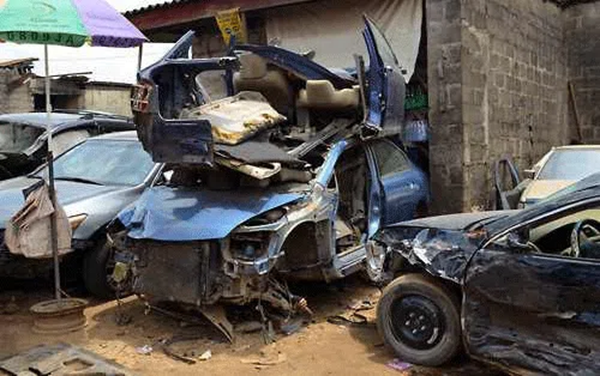
If you live in Nigeria, chances are you’ve seen it countless times — a broken-down car abandoned by the roadside, tyres stripped, bonnet rusting, weeds growing through the engine bay. From Lagos highways to rural roads in Enugu, Kano, Ibadan and Port Harcourt, end-of-life vehicles have quietly become part of our landscape.

Until now.

From 2026, the Federal Government is preparing to flip the script. What was once an eyesore, a safety risk and an environmental headache is about to become a regulated industry worth over ₦150 billion every year. At the centre of this shift is a mandatory vehicle recycling fee that Nigerians will pay when buying or registering vehicles.

Officials say the move will clean up the environment, create thousands of jobs, stop Nigeria from being a dumping ground for dead cars — and fundamentally change how the auto sector works.

Here’s a clear, down-to-earth breakdown of what this new policy really means for everyday Nigerians.

1. The recycling fee officially starts in 2026

Beginning in 2026, anyone registering a vehicle in Nigeria — whether brand new or fairly used — will pay a mandatory recycling fee. It will be collected at the point of registration, not years later.

2. It’s backed by a government-approved ELV policy

The fee is part of the End-of-Life Vehicle (ELV) programme, a policy already approved by the Federal Government to manage how old, broken and unsafe vehicles are handled.

3. FG expects over ₦150bn every year

By formalising vehicle recycling, the government estimates annual revenues of more than ₦150 billion, money that currently slips through the cracks of the informal economy.

4. The money isn’t just for revenue

Officials insist the fee will fund:

* Proper vehicle dismantling

* Safe recycling of metals and components

* Environmentally responsible disposal of unusable parts

In short, fewer dead cars rotting on Nigerian roads.

5. Nigeria is copying what works abroad

In countries across Europe and parts of Asia, vehicle buyers pay upfront for disposal long before their car breaks down. Nigeria is simply adopting a system that already works globally.

6. Expect complaints — at first

Government officials admit Nigerians may resist the idea initially. But they argue it’s better to pay a small fee upfront than live with environmental damage, unsafe roads and abandoned wrecks everywhere.

7. Most “old cars” aren’t useless

Studies show that over 85% of parts from end-of-life vehicles can still be reused or recycled — engines, doors, electronics, metals and more.

8. Belgian parts market won’t disappear — it will evolve

The popular “Belgian parts” market isn’t going anywhere. Instead, it will be better regulated, safer and more organised, allowing traders to operate within a formal recycling system.

9. Thousands of new jobs are expected

The recycling value chain will open doors for:

* Mechanics

* Dismantlers

* Welders

* Transporters

* Spare parts dealers

* Logistics operators

For many young Nigerians, it could become a new source of livelihood.

10. Nigeria is importing more cars again

Vehicle imports bounced back strongly in 2025, hitting about ₦1.01 trillion in just nine months — a sign that demand is rising as forex conditions improve.

11. Tokunbo cars still rule

Despite rising costs, fairly used vehicles remain the backbone of Nigeria’s auto market, driven by affordability and durability concerns.

12. Dead cars from abroad will soon be blocked

From 2026, all used vehicles coming into Nigeria must pass pre-export certification before leaving their country of origin.

13. Foreign exporters will pay — not Nigerians

The cost of certification will be borne by exporters, shutting down the practice of dumping rusted, unroadworthy vehicles in Nigeria for quick profit.

14. Nigeria has been an easy target

Because Nigeria lacked strict import checks, it became a favourite destination for exporters looking to offload end-of-life vehicles. That loophole is about to close.

15. Petrol and diesel won’t be the only options

The reforms also push for converting vehicles to:

* Electric Vehicles (EVs)

* Compressed Natural Gas (CNG)

This aligns with Nigeria’s long-term energy and climate goals.

16. Mechanics and regulators are already being trained

The NADDC has started nationwide training on EV maintenance, vehicle conversion and CNG retrofitting to prepare the workforce.

17. Official EV and CNG certifications arrive in 2026

Structured certification programmes and national standards will be rolled out to ensure safety and professionalism.

18. Nigerian-made vehicles are quietly emerging

Universities and local engineers are already developing:

* Tricycles

* Buses

* Electric campus shuttle vehicles

Proof that local innovation is gaining momentum.

19. Parts, not cars, drain Nigeria’s money

Nigeria spends more importing tyres, batteries, brake pads and filters than complete vehicles — which is why component manufacturing is now a major focus.

20. Auto policy may soon become law

Plans are underway to turn the National Automotive Industry Development Plan into an Act of Parliament, giving investors stronger legal backing.

21. Why 2026 really matters

Government officials describe 2026 as the year Nigeria’s auto industry finally changes direction — from chaos to structure, from waste to value, and from import dependence to industrial growth.

The Bottom Line

That abandoned car by the roadside? Under the new system, it won’t just rot away. It could become spare parts, raw materials, jobs — and revenue.

Also Read: Why I Spoke About Christian Persecution In Nigeria – Nicki Minaj

Love it or hate it, the vehicle recycling fee is coming. And by 2026, Nigeria’s roads — and auto industry — may never look the same again.

News, Trending

Auto Reforms: FG Plans Mandatory Vehicle Recycling Fees from 2026

Nigeria’s Federal Government is preparing to unlock a major new revenue stream by formalising the country’s largely informal vehicle recycling sector, with projections showing the initiative could generate more than ₦150bn annually from 2026.

The plan was unveiled by the National Automotive Design and Development Council (NADDC), whose Director-General, Joseph Osanipin, said the strategy is anchored on a newly approved End-of-Life Vehicle (ELV) programme designed to modernise the automotive industry while tackling environmental and safety risks.

Under the scheme, vehicles that have reached the end of their usable life will be formally collected, dismantled and recycled, replacing the current practice of roadside abandonment and unregulated scrapping. Osanipin described the shift as turning a long-standing problem into a structured economic opportunity.

He explained that the policy would mirror practices in advanced economies, where vehicle owners contribute a small fee during registration to cover the cost of safe disposal and recycling at the end of a vehicle’s lifespan. Although the approach may initially meet public resistance, he said it is critical for building a sustainable automotive ecosystem.

Nigeria already operates a vast informal market for used auto parts—popularly known as the Belgian parts market—which Osanipin said reflects consumer concerns about the quality and durability of many new components. According to studies by the council, more than 85 per cent of parts from end-of-life vehicles can still be reused or recycled, offering a strong base for a formal circular economy.

Rather than leaving derelict vehicles to degrade the environment, owners would be incentivised to hand them over for recycling and earn value in return. If properly managed, Osanipin noted, the system could generate billions of naira annually while supporting thousands of jobs in dismantling, refurbishment, logistics and parts resale.

The announcement comes at a time when Nigeria’s auto import market is showing signs of recovery. Data recently cited by The PUNCH indicate that passenger vehicle imports were valued at about ₦1.01tn in the first nine months of 2025, compared with roughly ₦894bn in the same period a year earlier. Figures from the National Bureau of Statistics suggest momentum picked up significantly in the second half of the year, with a strong third-quarter performance offsetting earlier slowdowns.

While the rebound highlights renewed confidence—particularly in the fairly used, or “Tokunbo,” segment—it also exposes ongoing challenges such as high import costs, currency risks and Nigeria’s heavy reliance on foreign vehicles.

To address quality concerns, the NADDC plans to introduce mandatory pre-export certification for all used vehicles shipped to Nigeria starting in 2026. The measure is aimed at stopping the country from becoming a dumping ground for rusted and unroadworthy vehicles. Osanipin said exporters, not Nigerian buyers, would bear the cost of certification.

He recounted discussions with a foreign exporter who admitted sending multiple containers of end-of-life vehicles to Nigeria simply because it offered the highest returns. The new rules, he said, would ensure importers clearly understand the condition of vehicles before purchase.

Beyond recycling and imports, the council is also pushing ahead with alternative energy reforms, including converting petrol and diesel vehicles to electric and compressed natural gas (CNG) systems. Osanipin said extensive training programmes are already underway for regulators, technicians and industry players in electric vehicle technology, CNG retrofitting and vehicle conversion.

National Occupational Standards for EV maintenance and CNG conversion have been developed, with formal certification programmes expected to roll out in 2026.

Also Read: Mike Folarin, Daniel Etim-Effiong Share Shocking Life Stories

He added that local capacity is steadily improving, with Nigerian engineers and students working on vehicle designs such as tricycles, buses and electric shuttle vehicles in partnership with 12 universities and private firms.

According to Osanipin, real value in the automotive industry lies in component manufacturing rather than full vehicle imports. He noted that Nigeria spends more each year on items such as tyres, brake pads, filters and batteries than it does on importing complete cars. The council is therefore engaging stakeholders to resolve infrastructure, funding and policy challenges facing local manufacturers, particularly as Nigeria positions itself to leverage opportunities under the African Continental Free Trade Area.

To provide stronger legal backing for these reforms, the NADDC plans to push for the National Automotive Industry Development Plan to be enacted into law. Osanipin revealed that a draft Auto Industry Bill would soon be submitted to the National Assembly, stressing that the scale of investment required in the sector demands legislative support.

Acknowledging that some of the reforms may attract criticism, he appealed to the media to help communicate their long-term benefits to the public, describing 2026 as a turning point for Nigeria’s automotive industry.

News, Politics, Trending

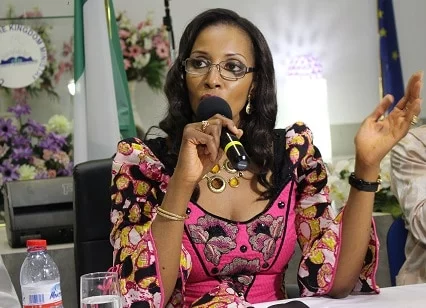
Bianca Ojukwu Slams MC Over Height-Shaming Jokes at Event

Nigeria’s Minister of State for Foreign Affairs, Bianca Ojukwu, has shared a personal account of an awkward moment she experienced at a public event, following what she described as an ill-judged performance by the Master of Ceremonies.

In a post shared on her Instagram page, Ojukwu recounted how the MC repeatedly cracked jokes about tall people, portraying them as arrogant and detached. According to her, the comments felt pointed, as the MC consistently glanced in her direction while delivering the jokes.

Clearly unimpressed, the minister criticised what she saw as a lack of tact and basic common sense, noting that such remarks added nothing meaningful to the event. She expressed frustration at how casually offensive humour is sometimes excused under the guise of comedy, especially when delivered by someone wielding a microphone and addressing a captive audience.

Ojukwu also took a sarcastic swipe at the MC’s self-description as a comedian, DJ and aspiring musician, suggesting that titles are easily claimed without substance. With a mix of wit and sharp humour, she hinted that she might respond in her own way — jokingly alluding to offering him a “Christmas gift” in the form of one of her music albums.

Also Read: PENGASSAN Warns Against Full Sale of Refineries, Cites Energy Security Risks

She ended her post on a playful but ominous note, suggesting that if she ever took the stage herself, the outcome would be memorable.

The post has since sparked conversations online about respect, humour boundaries, and professionalism at public events.

News, Politics, Trending

Taiwo Oyedele Warns Workers Will Stay Overtaxed if Tax Laws Are Delayed

The Chairman of the Presidential Fiscal Policy and Tax Reforms Committee, Taiwo Oyedele, has warned that a significant portion of Nigerian workers will continue to bear excessive tax burdens if the newly passed tax laws are not implemented by January 1, 2026.

Oyedele spoke on Monday during an appearance on Channels Television’s The Morning Brief, addressing growing debates surrounding the anticipated rollout of the tax reforms.

Several prominent stakeholders, including former Vice President Atiku Abubakar and ex-Labour Party presidential candidate Peter Obi, have called for a postponement of the laws until their concerns are fully addressed.

However, Oyedele emphasized that delaying implementation would disproportionately affect the bottom 98 per cent of workers, who would continue to face overtaxation. He explained that businesses would miss out on available exemptions, small and unprofitable businesses would remain subject to minimum taxes, and the Value Added Tax (VAT) on essential goods would continue to drive up household costs for food, healthcare, and education.

“The implication of not implementing the new tax laws by January 1, 2026, is that the bottom 98 per cent of workers remain overtaxed,” Oyedele said. “Businesses will miss exemptions and continue to pay multiple taxes, creating unnecessary burdens. Minimum taxes remain on small businesses, and hidden VAT continues to push up the cost of basic consumables.”

Oyedele stressed that rather than suspending the laws entirely, implementation should proceed while addressing specific areas of concern.

“So, we need to be clear about what we are asking for,” he noted. “Even if there are substantial alterations to what the National Assembly passed, the law should still be implemented, while we simultaneously identify the issues and address them.”

Also Read: Nigeria Insecurity 2025 Review: Full List of Terrorist Attacks, Killings and Abductions

He further revealed that his committee has already approached President Bola Tinubu to initiate amendments on certain sections of the laws, particularly regarding definitions and references that require clarification.

The new tax laws encompass the Nigeria Tax Act, Nigeria Tax Administration Act, Nigeria Revenue Service (Establishment) Act, and the Joint Revenue Board (Establishment) Act, all consolidated under the Nigeria Revenue Service.

According to the Federal Government, the reforms aim to simplify tax compliance, broaden the tax base, eliminate overlapping taxes, and modernize revenue collection across federal, state, and local governments.

Scroll to Top
site logo

Gym

Join our newsletter channel