
Sunday, 14 DecemberWeather Icon-7.65°C

December 13, 2025

Feature, News, Politics

Wike at 58: Prominent Nigerian Politicians Who Share His Birth Month

As Nyesom Wike celebrates his 58th birthday on December 13, it’s fascinating to note that he is part of an unusually star-studded cohort of political heavyweights born in December.

From presidents to senate leaders and governors, December seems to produce leaders whose influence stretches across eras and borders.

These figures — some celebrated, others controversial — show how the closing month of the year has been a cradle for political ambition and power.

Let’s explore those political titans who share Wike’s birth month and the legacies that accompany their December origins.

1. Muhammadu Buhari — December 17

One of Nigeria’s most consequential leaders, Late Muhammadu Buhari was born on December 17, 1942, in Daura, Katsina State.

Buhari’s political journey spanned military and civilian rule — he first seized power as Nigeria’s head of state in a military coup in 1983 and later returned to democratic politics, eventually serving as President from 2015 to 2023.

His leadership style was defined by an austere anti-corruption stance and contentious security strategies that drew both praise and criticism.

Buhari’s December birthday places him just a few days after Wike’s, underscoring the unusual political weight carried by leaders born in this month.

2. Diezani Alison-Madueke — December 6

Diezani Alison-Madueke is one of Nigeria’s most high-profile female politicians, born on December 6, 1960.

She served in multiple ministerial roles, including Minister of Transportation, Minister of Mines & Steel, and Minister of Petroleum Resources.

Her career broke ground for women in Nigerian politics, especially as she became the first female President of the Organization of Petroleum Exporting Countries (OPEC).

Madueke’s rise — and the controversies that trailed her — reflect the complex intersections of gender, governance, and power in Nigeria’s political landscape.

3. Theophilus Danjuma — December 9

Born on December 9, 1938, Theophilus Danjuma transitioned from military leadership to political and business influence.

A former Chief of Army Staff and Minister of Defence, Danjuma played a pivotal role in Nigeria’s post-independence military and political evolution.

Beyond his military legacy, he has remained influential in national affairs through corporate ventures and philanthropy.

His December birthday aligns with a generation of leaders whose impact is both institutional and personal.

4. Hope Uzodimma — December 12

While lesser known internationally, Hope Uzodimma is a prominent contemporary politician born on December 12, 1958.

He is the Governor of Imo State, having served in the Senate and played key roles within the All Progressives Congress (APC).

Uzodimma’s political journey — marked by legal battles and electoral controversies — reflects the dynamic tensions of governance in Nigeria’s southeast.

His December birthday places him in the same seasonal cohort as Wike, albeit on a different political trajectory.

5. Bukola Saraki & Godswill Akpabio — December 19

December 19 is especially rich with political talent. Both Bukola Saraki and Godswill Akpabio were born on this date in 1962, each rising to national prominence.

* Saraki served as Governor of Kwara State and later as President of the Nigerian Senate.

His political journey — including party shifts between APC and PDP — has made him one of the most central figures in legislative politics.

* Akpabio, a former Governor of Akwa Ibom State, has held several national roles and is a leading voice in the Senate. His political influence is widely recognised across southern Nigeria.

This shared birth date highlights an intriguing sibling-like dynamic: two powerful politicians rising from different regions, yet both shaping Nigeria’s legislative and executive discourses.

6. Abubakar Umar Ganduje — December 25

Born on December 25, 1949, Abubakar Umar Ganduje came to prominence as the Governor of Kano State and later as National Chairman of the All Progressives Congress (APC).

Also Read: Fubara Celebrates Wike at 58, Praises His Transformational Leadership in Abuja

Ganduje’s political career has been significant in Nigeria’s northern political architecture, where his decisions have often influenced national party strategies.

A Christmas-born leader, his December birthday juxtaposes festive celebration with the intensity of political command.

What December Leaders Tell Us About Political Destiny

From Wike’s dynamic leadership style to Buhari’s long shadow over Nigerian politics, December seems to be a month that produces leaders with charisma, controversy, and national influence.

Whether navigating governance challenges or shaping legislative landscapes, these December-born politicians offer a compelling lens into how timing — even birth month — can add an unexpected layer of narrative to political life.

As Wike marks 58, he joins this distinguished roster — not just by birth month, but as part of a political generation that refuses to be ignored.
Feature, News, Politics, Trending

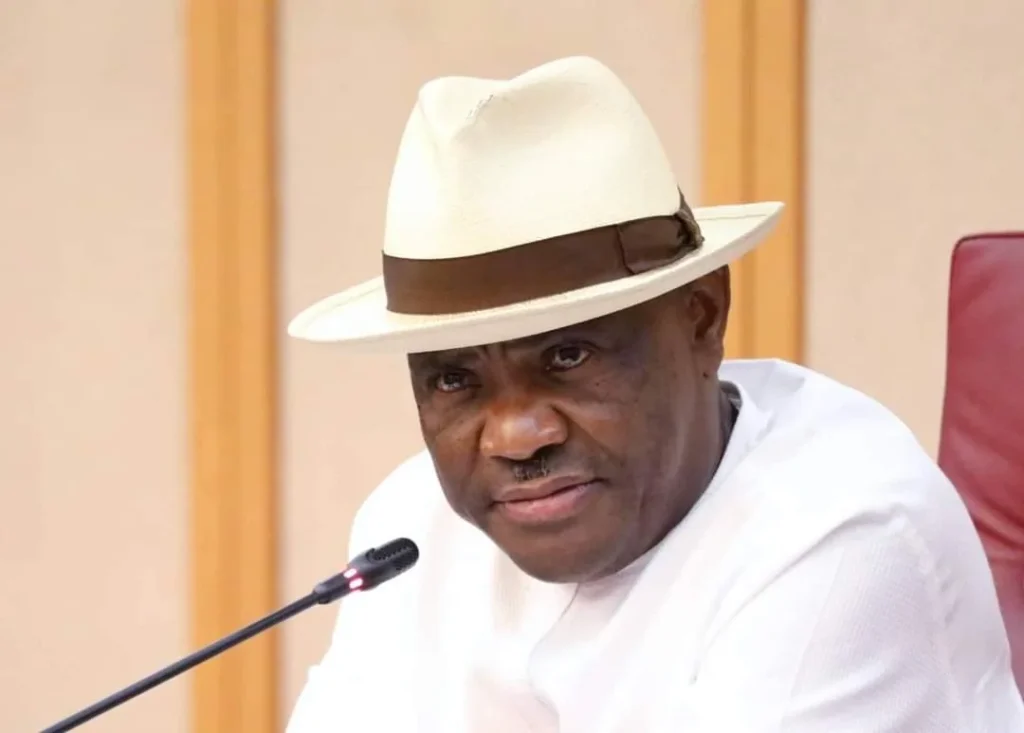
How Wike Became Tinubu’s Most Influential Minister—Without Joining APC

At exactly 58, Nyesom Wike is not supposed to be here.

Not here—at the very centre of President Bola Ahmed Tinubu’s government.

Not here—commanding attention in a cabinet dominated by the ruling party.

Not here—setting the pace in Abuja while many “party men” struggle to explain their relevance.

Yet, here he is.

In a political system obsessed with party loyalty, Wike has done something almost heretical: he made performance louder than ideology.

And in doing so, he has become one of the most talked-about, most controversial, and arguably most influential figures in Tinubu’s administration—without wearing the APC badge.

That contradiction alone is enough to make Nigeria’s political elite uncomfortable.

A Birthday That Exposed A Power Shift

When birthday messages poured in—from President Tinubu himself to Rivers State Governor Siminalayi Fubara—they did more than celebrate a man’s new age.

They inadvertently exposed a political reality many would rather ignore: Wike is no longer just a former governor or a minister. He is a power centre.

Presidents don’t lavish praise casually. Governors don’t publicly celebrate political figures whose influence has waned. Yet, across party lines, the message was the same: Wike is delivering, and everyone sees it.

In a country where ministers often disappear into bureaucracy, Wike has done the opposite.

He has turned the Federal Capital Territory into a theatre of visibility—roads reopened, projects revived, timelines enforced.

The long-stalled Apo–Karshi road alone became symbolic: a 14-year deadlock broken not by rhetoric, but by raw political will.

And that is where the trouble began.

The Problem With Being Too Effective

Wike’s rise in Tinubu’s cabinet has created an uncomfortable question whispered in political circles and shouted on social media:

How did an “opposition” politician become one of the defining faces of this government?

For APC loyalists, it is an irritation.

For PDP purists, it is a betrayal.

For ordinary Nigerians, it is confusing—and fascinating.

Wike did not just cross party lines; he blurred them. He forced a reckoning with a dangerous idea in Nigerian politics: what if delivery matters more than party label?

That idea threatens the entire ecosystem of entitlement politics.

From Rivers Strongman To Abuja Power Broker

Wike’s story did not begin in Abuja. In Rivers State, he built a reputation as a combative, unapologetic political enforcer—loved by supporters, loathed by critics, feared by opponents.

He governed loudly, fought publicly, and built aggressively.

But Abuja is different. It swallows many politicians whole.

Yet, instead of shrinking into protocol, Wike expanded. He brought the same Rivers intensity to the federal capital—bulldozing delays, confronting contractors, and speaking with a confidence that suggests he answers not to party pressure but to results.

That posture alone has elevated him. In a cabinet where silence is often mistaken for loyalty, Wike’s noise has become influence.

The Tinubu–Wike Equation Nobody Wants To Decode

President Tinubu is not sentimental about politics; he is strategic. Which is why the continued prominence of Wike tells its own story.

This is not charity. It is utility.

Tinubu appears to have made a calculation that unsettles traditional party thinking: a performing outsider may be more valuable than a loyal underperformer.

And Wike, aware of this reality, has leaned fully into delivery as his political insurance.

The result? A minister whose relevance does not depend on party meetings or factional protection—but on concrete, asphalt, and visibility.

Why Wike’s Success Is Politically Dangerous

Wike’s Abuja performance is not just impressive; it is destabilising.

It raises uncomfortable comparisons within the cabinet.

It emboldens citizens to ask harder questions.

It weakens the argument that party loyalty alone deserves reward.

Most dangerously, it sends a signal to future governments: competence can disrupt political hierarchies.

Also Read: Accord Party Debunks Crisis Rumors, Confirms Adeleke’s Governorship Win

That is why Wike attracts both applause and resentment in equal measure.

At 58, The Real Question Isn’t His Age—It’s His Trajectory

As Nyesom Wike marks another year, the debate around him is no longer about where he came from, but where he is going—and what his rise says about Nigeria’s political future.

Is he proof that Nigerian politics can evolve beyond rigid party lines?

Or is he an exception that proves the rule?

Is his influence temporary—or a preview of a new political order where results outweigh allegiance?

One thing is clear: you cannot ignore him.

At 58, Wike is not winding down. He is peaking—right at the heart of power, in a government he was never “supposed” to dominate.

And that, more than any birthday message, is what has truly shaken the system.

Wike, Fubara Absent As Rivers Sole Administrator Ibas Holds Farewell Service
News, Politics, Trending

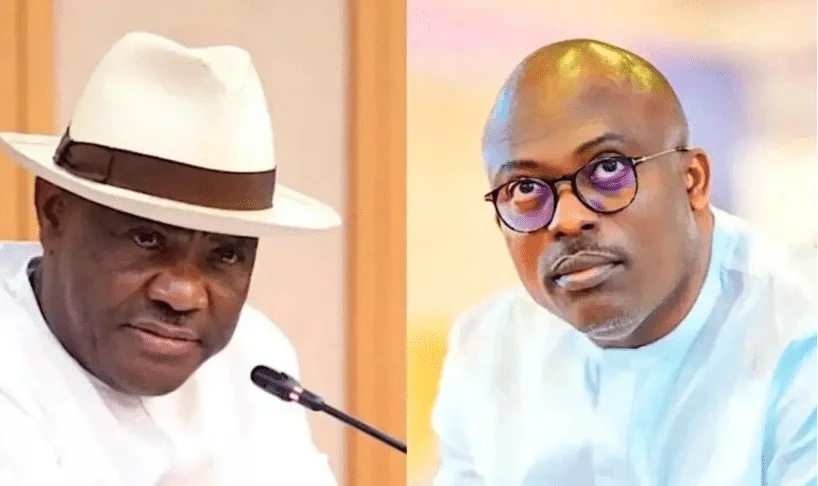
Fubara Celebrates Wike at 58, Praises His Transformational Leadership in Abuja

Rivers State Governor, Siminalayi Fubara, has extended warm birthday wishes to the Minister of the Federal Capital Territory, Nyesom Wike, as he marks his 58th birthday, praising his enduring dedication to public service and tangible achievements in governance.

In a statement personally signed in Port Harcourt on Saturday, December 13, 2025, Governor Fubara said the people of Rivers State take pride in the former governor’s performance, particularly the pace and scale of infrastructural development currently unfolding in Abuja under his leadership.

Fubara noted that Wike’s tenure as FCT Minister has drawn nationwide attention, with ongoing and completed projects significantly reshaping the capital city. He described the impact of these initiatives as both visible and measurable, underscoring their contribution to improved public service delivery and urban development.

Speaking on behalf of his family and the entire Rivers State populace, the governor said the birthday celebration comes at a time when Wike’s leadership and results-driven approach are receiving widespread recognition across the country.

According to Fubara, the minister’s hallmark commitment to excellence has translated into unprecedented progress in the expansion of public infrastructure within the FCT, reinforcing his reputation as a leader focused on outcomes rather than promises.

Also Read: “Champion Of Renewed Hope” — Tinubu Celebrates Wike on Birthday

The governor concluded by wishing Wike a joyous birthday and many more years of meaningful service to the nation, expressing confidence in his continued contributions to national development.

News, Politics, Trending

“Champion Of Renewed Hope” — Tinubu Celebrates Wike on Birthday

President Bola Ahmed Tinubu has sent warm birthday greetings to the Minister of the Federal Capital Territory, Nyesom Wike, as the former Rivers State governor marked his birthday on December 13.

The message was conveyed in a statement issued on Saturday by the President’s Special Adviser on Information and Strategy, Bayo Onanuga.

In it, Tinubu expressed gratitude to God for Wike’s life, describing it as one characterised by courage, dedication, and a strong sense of public service.

The President praised Wike’s performance in office, portraying him as a bold and result-oriented leader who consistently overcomes challenges. He specifically pointed to the ongoing infrastructural upgrades across the Federal Capital Territory, noting that the Minister recently resolved a long-standing bottleneck with the Apo–Karshi road project, which had stalled for about 14 years.

Tinubu also commended Wike’s work ethic and resilience, highlighting his reputation for excellence and his hands-on approach to governance. According to the President, these qualities have continued to reflect in the rapid pace of development currently being witnessed in the FCT.

You May Like: Wizkid Reveals He Wants Asake to Perform at His Wedding: Favourite Song ‘Remember’

While acknowledging Wike’s political background outside the ruling party, Tinubu described him as a key contributor to the administration’s Renewed Hope Agenda. He lauded the Minister for extending his well-known “Mr Project” reputation beyond Rivers State and delivering impactful infrastructure projects in the nation’s capital.

The President concluded by wishing Wike a happy birthday and praying for renewed strength and wisdom as he continues his assignment in the Federal Capital Territory.

Scroll to Top
site logo

Gym

Join our newsletter channel