Sunday, 14 DecemberWeather Icon-11.28°C

December 3, 2025

Entertainment, News, Trending

“Una Must Find Space for Me” — Portable Reacts to Juma Jux Collaboration

Nigerian street sensation Habeeb Okikiola Badmus, popularly known as Portable, has openly expressed frustration after being left out of Tanzanian singer Juma Jux’s latest collaboration.

The controversy emerged after Juma Jux recorded a song with Portable’s colleague, Ekunrawo, in Nigeria without notifying Portable.

Taking to Instagram, the fiery singer demanded inclusion in the track, asserting that it was unfair to be sidelined in a project involving his close associate.

“So juma_jux enter Naija do song with my bro @officialekunrawo and nobody tell me. E don set oo. Una must find space for me for this Halima song,” Portable wrote.

Portable Claims His Rise to International Stardom

In addition to his critique of Juma Jux, Portable also reflected on his journey in the music industry. He declared that despite being overlooked by senior colleague Olamide, he is destined for global recognition.

According to Portable, his rise from a local rapper to international stardom has been fueled by relentless perseverance, divine guidance, and collaborations with overseas artists, including the British rapper Skepta.

“I am unstoppable. Olamide will one day regret not signing me,” he said in an Instagram post.

“I fought for my own rights and carved my path. My story is bigger than any professional disagreements.”

The Street Star’s Bold Assertion

Portable’s comments highlight the challenges of navigating the Nigerian music industry, where collaborations and recognition often determine an artist’s trajectory.

Also Read: 2026 Off-Cycle Election: Accord Courts Adeleke After PDP Exit

While some see him as a street rap icon, Portable views himself as an unstoppable force, ready to claim his place on the international stage.

Fans are now eagerly watching to see whether Juma Jux and Portable will resolve the disagreement or if the “Halima” collaboration will proceed without him.

News, Trending

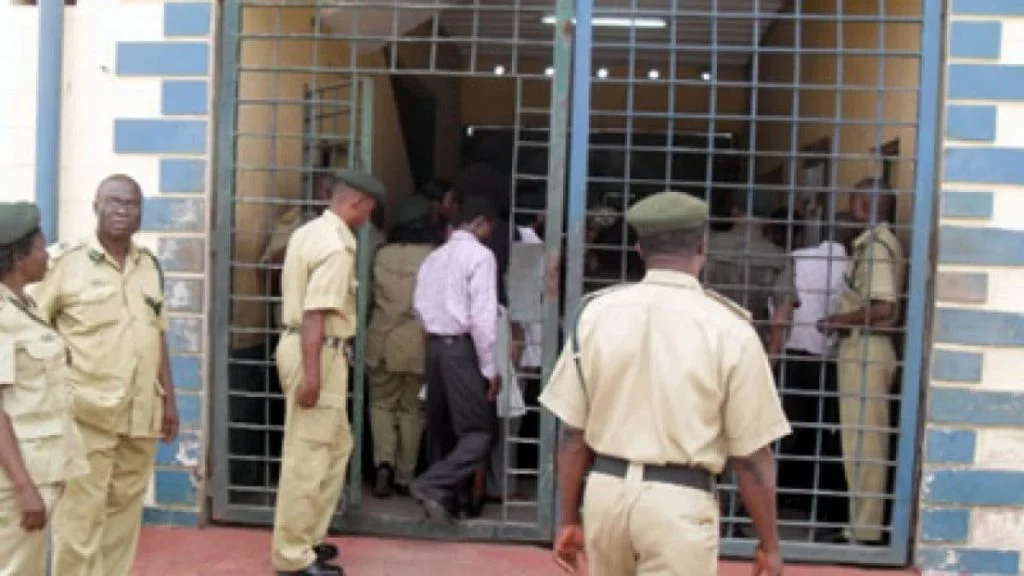
NCoS Reaffirms Integrity After Yobe Officers Suspended for Alleged Misconduct

The Nigerian Correctional Service (NCoS) has suspended a number of officers at one of its custodial centres in Yobe State following allegations of unprofessional conduct involving inmates.

The suspension, effective immediately, will remain in place until a full investigation is concluded.

The Service’s Public Relations Officer, Chief Superintendent of Corrections J. N. Osuji, confirmed the development in a statement on Tuesday, noting that the implicated personnel have been issued formal queries demanding explanations for their actions.

Minister of Interior Approves Suspension

According to the statement, the suspension was approved by the Minister of Interior, Olubunmi Tunji-Ojo, after reviewing a preliminary report on the matter. The minister expressed deep concern over the alleged misconduct and reiterated that the Federal Government will not tolerate any behavior that undermines discipline or ethical standards within correctional institutions.

“The NCoS maintains a strict zero-tolerance policy for all forms of misconduct, negligence, rights violations, or inappropriate relationships between staff and inmates,” the statement said.

Tunji-Ojo added, “Any officer found culpable will face appropriate disciplinary measures and possible legal sanctions in accordance with established regulations.”

NCoS Reaffirms Commitment to Professionalism

The Controller-General of the Nigerian Correctional Service, Sylvester Nwakuche, also reassured Nigerians that the Service remains committed to accountability, integrity, and professionalism.

He emphasised that all correctional facilities nationwide are expected to operate strictly within the law and uphold ethical standards.

“Every officer is expected to maintain the highest level of integrity while carrying out their duties,” Nwakuche stated.

Also Read: 2026 Off-Cycle Election: Accord Courts Adeleke After PDP Exit

“The NCoS will continue to ensure that all facilities function in line with legal frameworks and professional codes of conduct.”

The ongoing investigation aims to establish the facts behind the allegations, and the outcome could result in disciplinary or legal action against officers found guilty of misconduct.

News, Politics, Trending

2026 Off-Cycle Election: Accord Courts Adeleke After PDP Exit

The Lagos State Chairman of the Accord Party, Dele Oladeji, has declared that the party would gladly receive Osun State Governor, Ademola Adeleke, should he choose Accord as his new political home ahead of the 2026 governorship election.

Oladeji made the remarks in an interview with the News Agency of Nigeria (NAN) on Wednesday, shortly after Adeleke announced his exit from the Peoples Democratic Party (PDP).

Adeleke’s departure followed months of lingering leadership battles and internal divisions within the party.

“We Are Waiting for Him” — Accord Signals Openness

Speaking confidently, Oladeji said Accord was not only open to Adeleke—but already expecting him.

“We are waiting for his declaration. That is what we can say for now. Whenever he decides to step into Accord, we are prepared to receive him.”

He described the party as ready, organised and strategically positioned to offer the governor a stable platform to pursue his second-term ambition.

A Haven Without Factions, Godfathers, or Crisis

Oladeji emphasised that Accord prides itself on internal peace and party discipline, qualities he said politicians like Adeleke are currently seeking.

“Accord is a very stable and sanitised political platform. We have no factions and no godfathers,” he said.

He argued that the party’s lack of internal conflicts makes it an attractive destination for aspirants looking for a clean, dependable structure ahead of major elections.

“Any candidate who joins us from now until 2027 is guaranteed a peaceful, consistent and functional structure.”

Adeleke Seeking Stability for Second-Term Pursuit

Naija News previously reported that Governor Adeleke, who plans to contest for a second term in the 2026 off-cycle governorship race, is exploring more stable political grounds following the turbulence in the PDP.

Also Read: How Fela Raised Me Without Teaching — Femi Kuti Shares Untold Childhood Story

According to Oladeji, Accord not only understands Adeleke’s concerns but is prepared to mobilise its structures in his favour if he decides to make the switch.

“If he decides to join Accord, we will be fully ready to work with him and ensure his success,” he assured.

News, Politics, Trending

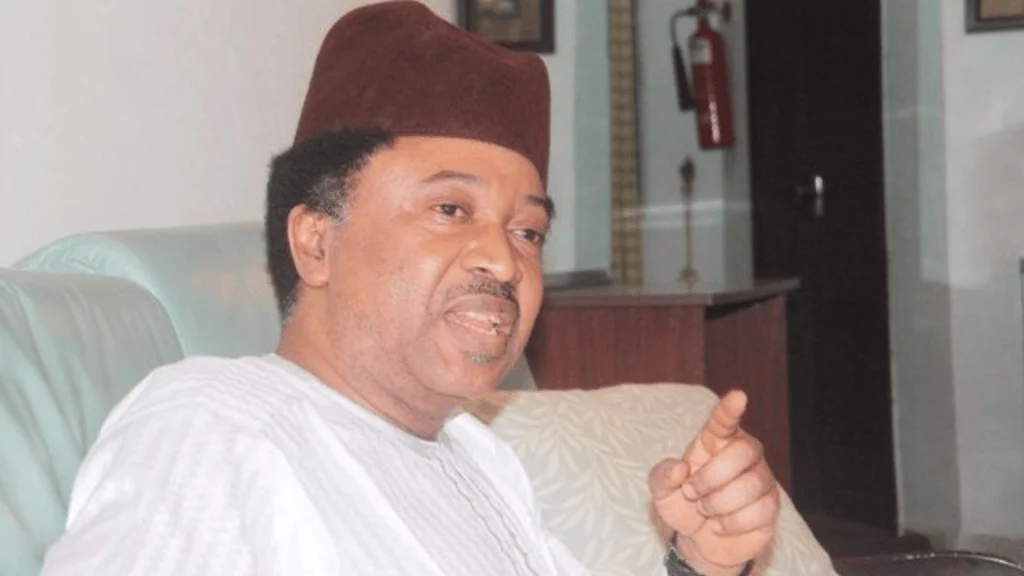
Shehu Sani: Nigerian Bandits Are Homegrown, Not Foreign Fighters

Former Kaduna Central Senator, Shehu Sani, has dismissed claims that the bandits wreaking havoc across Nigeria originate from neighbouring countries like Mali or Burkina Faso.

According to him, the threat is far more internal than many Nigerians have been led to believe.

Speaking on The Morning Show on Arise TV, the outspoken former lawmaker insisted that the armed groups destabilising the North are deeply rooted in local communities—specifically, Fulani bandits operating in the North-West and Kanuri bandits operating in the North-East.

“These bandits are from northern Nigeria. North-West bandits are Fulanis, and North-East bandits are Kanuris. I don’t buy the narrative that they came from Mali or Burkina Faso,” Sani said.

“5,000 Bandits Cannot Hold 230 Million People Hostage”

Sani expressed disbelief that a country as populous and resourceful as Nigeria continues to allow a few thousand armed criminals to dictate the pace of national life.

He described the situation as unacceptable and called for a more coordinated, deliberate strategy from government and security agencies.

“It is inconceivable that roughly 5,000 bandits are holding a nation of over 230 million people to ransom,” he lamented.

“Government must act with more determination and clarity.”

Illegal Mining and Banditry: A Dangerous Nexus

The former senator also backed the decision to suspend illegal mining activities in regions plagued by insecurity.

According to him, the operations of miners and bandits have become so intertwined that distinguishing one from the other is now nearly impossible.

He noted that many mining zones double as safe havens for bandit groups, transporting weapons, shielding criminals, and enabling illicit transactions.

“Illegal miners are working hand in hand with bandits,” Sani stated.

“In many cases, you cannot tell who is a miner and who is a bandit. Temporarily halting mining gives the government and military room to act decisively.”

Banditry Has Crippled Northern Life

Sani painted a grim picture of how insecurity has destroyed agriculture, disrupted education, fractured social life, and displaced communities across northern Nigeria.

He argued that the situation has reached an existential level—one that requires unity and unwavering political will.

A Call for Collective Action

The former lawmaker urged all stakeholders to come together to confront the crisis. He called on:

* Traditional rulers

* Political leaders

* Civil society organisations

* State governors

* Northern community leaders

According to him, the North—and Nigeria as a whole—cannot afford to treat banditry as just another routine challenge.

Also Read: How Fela Raised Me Without Teaching — Femi Kuti Shares Untold Childhood Story

“If we are genuinely committed to solving this problem, we can solve it,” Sani insisted.

“Countries like Niger, Mali, and Burkina Faso have smaller budgets than Nigeria, yet they are doing everything possible to defend their territories.”

He emphasised that only a united, coordinated response would bring the lasting solution Nigerians have been clamouring for.

Feature, News, Trending

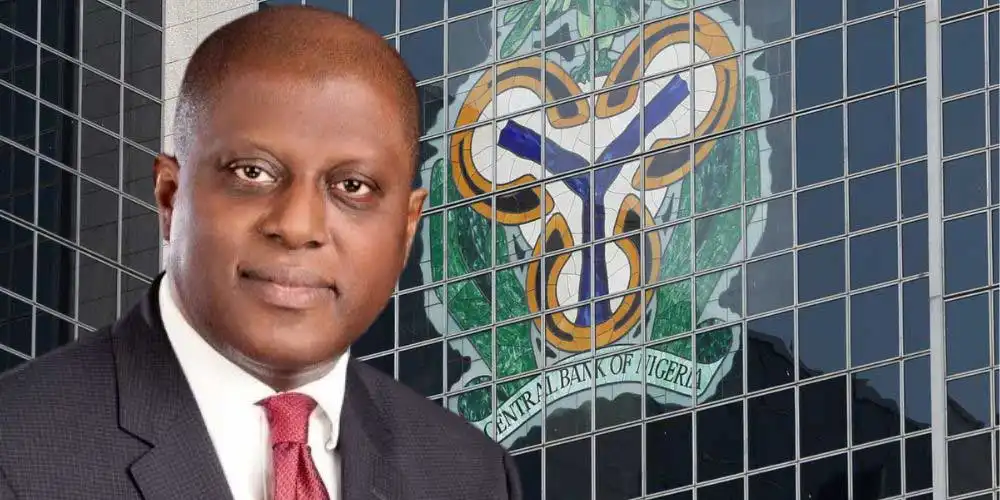
Breaking Down the CBN 2026 Cash Policy: Impact, Limits & What to Expect

If you think Nigeria’s financial landscape has been turbulent in recent years, brace yourself — because the Central Bank of Nigeria (CBN) is about to reset the rules of the game again.

And this time, it’s not a soft adjustment. It’s a full-blown transformation of how Nigerians will access and use their own money beginning January 1, 2026.

Forget the old days of strolling into a banking hall to withdraw millions with a smile and a signature. Forget special authorisations that allowed individuals to take home ₦5 million in cash monthly.

Forget corporate bodies pulling ₦10 million like routine pocket change.

The CBN has drawn the line in the sand — and whether you like cash, hate cash, hoard cash, or barely use it, this policy will touch you.

Right now, every Nigerian — from business owners to market women, civil servants to corporate executives — is asking the same questions: “What exactly is changing?”

“Will I still be able to withdraw what I need?”

“Will this make life harder or easier?”

“Is this another attempt to force Nigerians into a cashless system?”

This article breaks everything down for you in simple, clear, and practical terms. No confusion. Just the truth about what the 2026 withdrawal policy means for YOU.

What Is the CBN 2026 Withdrawal Policy?

The 2026 withdrawal policy is the CBN’s new cash-control framework that drastically reduces how much cash individuals and corporate entities can withdraw weekly.

It officially scraps the old special waivers that allowed higher cash withdrawals and replaces them with strict, across-the-board limits.

This marks one of Nigeria’s boldest financial reforms in decades — aimed at reshaping how money flows through the economy.

The New Withdrawal Limits — The Rules You MUST Remember

Starting January 1, 2026, here are the new limits:

FOR INDIVIDUALS

₦500,000 maximum per week (across all channels)

Withdrawal beyond this limit attracts 3% excess charges

FOR CORPORATE BODIES

₦5 million maximum per week

Excess withdrawals attract a 5% penalty

ATM WITHDRAWALS

Daily limit: ₦100,000

Weekly limit: ₦500,000

ALL denominations now allowed in ATMs

THIRD-PARTY CHEQUES (OTC)

Cashing a cheque above ₦100,000 is not permitted

Any cheque withdrawal counts toward your total weekly limit

CBN is leaving no loophole — every cash-out counts.

Why Is CBN Doing This? The Real Reasons Behind the Policy

The CBN has given several official explanations, but here’s what it really boils down to:

1. Nigeria Handles Too Much Physical Cash

We are one of the heaviest cash-dependent economies in Africa.

More cash = more theft, more corruption, more cash handling cost, more money laundering.

2. Cutting Cost of Cash Management

Printing, transporting, sorting, and securing cash costs the country billions annually.

A cashless system is cheaper and more transparent.

3. Anti-Money Laundering & Anti-Terror Financing Push

Terror groups, kidnap syndicates, and corrupt politicians thrive on large cash transactions.

Limiting cash makes illegal money movements easier to detect.

4. Digital Payment Expansion

CBN wants Nigeria to join the league of modern economies where money moves electronically rather than physically.

5. Harmonising Multiple Confusing Policies

Over the years, Nigeria has had overlapping cash policies.

The 2026 rule is designed to simplify everything into one clean framework.

Who Will Be Affected the Most?

Let’s be honest — some Nigerians will feel this more than others.

Small and Medium Businesses that Depend on Cash

Market traders, POS operators, transport companies, cement dealers, and cash-based retailers may struggle unless they transition to digital payment systems.

Politicians & Cash-Heavy Operators

The days of carrying Ghana-Must-Go bags of cash may be drastically reduced.

Organisations That Pay Workers in Cash

They must shift to digital payroll or face expensive withdrawal fees.

Rural communities

Areas with limited digital banking access will need targeted support or risk frustration.

Who Is Exempted?

Not everyone is affected. The following accounts remain free from the limits:

Federal Government revenue accounts

State and Local Government revenue accounts

Microfinance banks

Primary mortgage banks

BUT — Embassies, donor agencies, and diplomatic missions are no longer exempt.

What Banks Must Now Do

The CBN isn’t only regulating customers — banks must also comply with strict new duties:

File monthly reports of any withdrawal above the limit

Report high-value cash deposits

Keep separate accounts for excess withdrawal fees

Improve ATM availability and functionality

Ensure digital payment channels stay stable

What Nigerians MUST Do to Adjust

Instead of panicking, Nigerians can take these practical steps:

1. Embrace digital payments

Bank apps, transfers, POS, USSD, mobile wallets — they will matter now more than ever.

2. Reduce cash dependency

Only withdraw what you absolutely need.

3. Keep proper business records

Transparency can help avoid suspicion when making large deposits.

4. Plan major purchases in advance

Cash-heavy transactions may need restructuring.

5. Understand the charges

Know when withdrawals trigger extra fees.

Will This Policy Cause Hardship?

The honest answer: It depends.

For Nigerians already comfortable with digital payments, this transition will be smooth.

Also Read: New CBN Cash Policy: Individuals Limited to ₦500,000 Weekly From 2026

But for millions in rural or low-tech communities, the adjustment may be difficult — unless government and banks expand digital infrastructure.

What This Policy Means for Nigeria’s Future

The 2026 withdrawal policy signals a future where:

* Banks become more digital

* Less money circulates physically

* Fraud and corruption become harder

* Government can track financial flows better

* Nigeria moves closer to a fully cashless economy

Whether you’re for it or against it, one thing is clear:

Cash in Nigeria will never be the same again.

The 2026 Policy

The CBN 2026 withdrawal policy is more than a banking guideline — it is a national reset. It will challenge old habits, reshape businesses, and push Nigerians to rethink how money should move in a modern economy.

Some will see it as an inconvenience.

Others will see it as progress.

But for everyone, the takeaway is simple: The way you use cash is about to change — permanently.

Business, News, Trending

New CBN Cash Policy: Individuals Limited to ₦500,000 Weekly From 2026

The Central Bank of Nigeria (CBN) has unveiled sweeping changes to the nation’s cash withdrawal regulations, signaling a major shift in its long-term strategy to reduce cash dependency and strengthen financial security. The revised rules will officially come into force on January 1, 2026.

This update ends the special approval window that previously allowed individuals to withdraw up to ₦5 million and corporate bodies up to ₦10 million monthly.

The CBN explained that while earlier policies were introduced to respond to specific moments in Nigeria’s evolving economic landscape, current realities now require a more streamlined and modern approach.

Dr. Rita I. Sike, Director of the Financial Policy & Regulation Department, stated in a circular issued on December 2, 2025, that the reforms aim to cut the cost of handling physical cash, reduce security risks, and curb money laundering activities associated with Nigeria’s largely cash-driven economy.

“The policies introduced over the years sought to discourage excessive cash usage and encourage the adoption of electronic payment systems,” the CBN noted. “With time, it has become necessary to consolidate and update these measures to reflect today’s operational environment.”

New Withdrawal Limits for Individuals and Corporates

Under the revised guidelines:

* Individuals may withdraw a maximum of ₦500,000 per week across all banking channels.

* Corporate organisations will be restricted to ₦5 million weekly.

Any withdrawal exceeding these amounts will attract excess charges:

* 3% for individuals

* 5% for corporates

These fees will be shared between the CBN and participating financial institutions.

ATM Withdrawals and Third-Party Cheques

The apex bank also announced new limits for Automated Teller Machines:

* Daily ATM withdrawals are capped at ₦100,000 per customer.

* Weekly ATM withdrawals may not exceed ₦500,000, and all such transactions will count toward the overall withdrawal limit.

In addition, all denominations of the naira may now be loaded into ATMs for greater flexibility.

The existing ₦100,000 limit on over-the-counter encashment of third-party cheques remains in place and will also count toward the weekly withdrawal cap.

Reporting Requirements and Exemptions

To ensure strict compliance, Deposit Money Banks must:

* Submit monthly reports of all withdrawals exceeding the approved limits.

* Report all significant cash deposits to the CBN.

* Maintain dedicated accounts for storing fees collected on excess cash withdrawals.

Certain accounts will continue to enjoy exemptions from the new limits, including:

* Federal, state, and local government revenue accounts

* Accounts belonging to microfinance banks and primary mortgage banks

Also Read: How Fela Raised Me Without Teaching — Femi Kuti Shares Untold Childhood Story

However, exemptions previously granted to embassies, diplomatic missions, and donor agencies have now been revoked.

Circular Overrides Earlier Directives

The CBN clarified that while the circular does not invalidate all previous policies, it overrides several conflicting directives. A list of affected policies is included in the circular’s appendices.

The revised cash withdrawal system represents one of the most significant policy shifts in recent years and is expected to accelerate Nigeria’s transition toward a more digital and transparent financial ecosystem.

Entertainment, Music, News, Trending

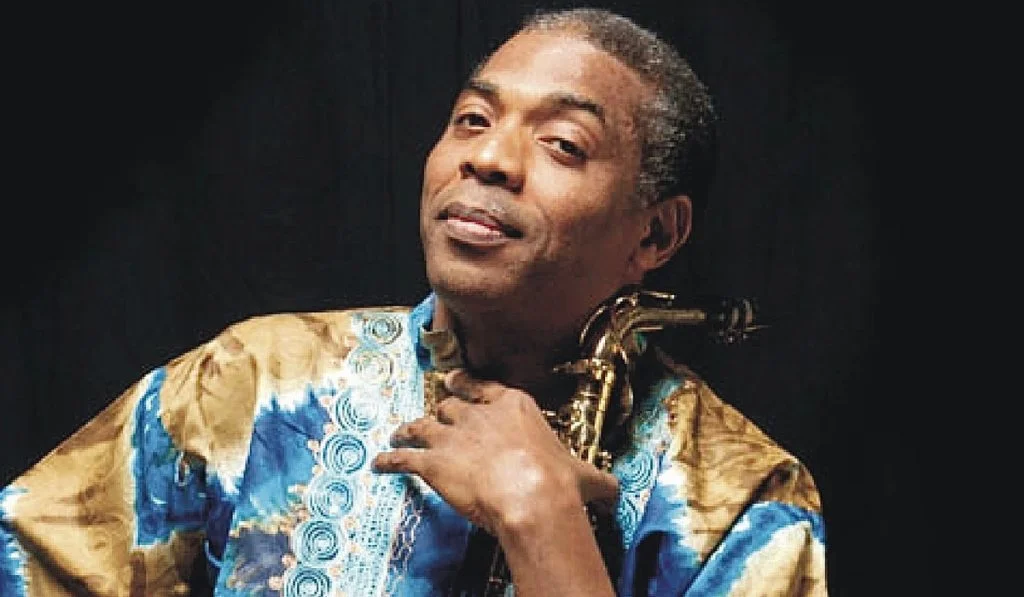
How Fela Raised Me Without Teaching — Femi Kuti Shares Untold Childhood Story

Nigerian music legend Femi Kuti has shed light on the unusual and often challenging childhood he experienced under his father, the late Afrobeat pioneer Fela Anikulapo-Kuti.

Speaking at the Ake Arts and Books Festival in Lagos, Femi explained that growing up in the Kuti household meant learning without guidance and discovering life through instinct and observation.

According to him, the home he grew up in had no formal teaching, no structured lessons, and no typical father-to-son moments. Yet, Fela expected brilliance—without excuses.

“My father believed I should simply know things,” Femi said, recalling how he was pressured to read and understand subjects he had never actually been taught. “How do you read if nobody teaches you? But he would say, ‘You should know.’”

A Childhood Built on Observation, Not Instruction

Femi described his early years as a daily exercise in watching, absorbing, and figuring things out for himself. He said the environment around Fela demanded exceptional performance from everyone—there was no room for hesitation or failure.

He learned more from witnessing his father navigate danger, constant police raids, and political persecution than from any classroom. He often bombarded Fela with questions that most children never had to consider.

“I would ask him, ‘Are you not afraid to die?’ and he would give me his answer,” Femi said, noting how those conversations shaped his worldview far more deeply than textbooks ever could.

Confusing Praise, No Anger — And a Deep Desire to Stand Alone

Interestingly, poor grades never attracted anger from Fela. Instead, Femi said his father often responded with disarming indifference or confusing praise, making him wonder what was truly expected of him as a child in such an extraordinary household.

Also Read: No Deals With Terrorists: Presidency Speaks on Kebbi Abductions

These contradictions influenced his decision to eventually step out of Fela’s shadow. Leaving his father’s band, he said, became necessary for him to build his own identity and to prove—to himself most of all—that he was not destined to be a replica.

Finding His Voice: “I Was Born to Be Femi, Not Fela”

Femi recalled that when he released his first album, Fela dismissed it outright. But rather than discourage him, the rejection strengthened his resolve to build a career rooted in his own sound, his own message, and his own life experiences.

“If God wanted me to be Fela, I would have been Fela. I had to be Femi Kuti,” he said.

“I worked hard, I grew, and I carved my own path.”

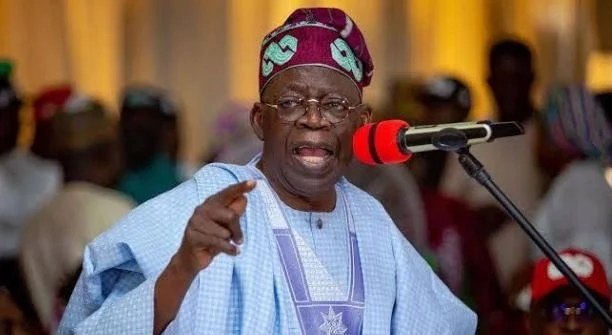
President Bola Tinubu
News, Politics, Trending

No Deals With Terrorists: Presidency Speaks on Kebbi Abductions

President Bola Tinubu’s Special Adviser on Policy Communication, Daniel Bwala, has reiterated that the Federal Government has adopted a strict policy against negotiating with terrorists.

Bwala made the clarification during an interview on Channels Television on Tuesday, noting that while past administrations explored negotiations under certain circumstances, the Tinubu government has taken a definitive stance.

According to him, older national security policies once allowed both federal and state authorities to consider dialogue with terror groups, particularly when innocent lives were at stake.

He explained that such negotiations were sometimes seen as the only viable means of securing the release of abducted citizens.

However, he stressed that President Tinubu’s administration views negotiation as counterproductive because ransom payments invariably end up strengthening criminal networks.

“When you pay ransom, even unknowingly, you are funding terrorism,” Bwala said.

“The money being given to secure victims is often used to acquire more weapons. That’s why the current administration maintains a zero-tolerance policy toward negotiations.”

Why Kidnap Victims Sometimes Regain Freedom Without Ransom

Speaking on the recent abduction and release of schoolchildren in Kebbi State, Bwala explained that several factors can lead to the return of captives—many of which do not involve ransom payments.

He noted that abductors sometimes backtrack when they believe holding onto victims could expose them to military retaliation or increased public pressure. In other cases, influential figures such as clerics or community leaders intervene and persuade the kidnappers to release their captives.

Bwala added that intelligence operations may also pressure the criminals without direct confrontation.

“Security agencies might identify their location but avoid a direct strike to prevent harming the innocent victims,” he said.

“In such situations, the pressure alone can force the abductors to release people on their own.”

Families, States Still Pay Ransom Privately, But Not FG — Bwala

While acknowledging that some desperate families and state governments sometimes engage in ransom payments on their own, Bwala insisted that the Federal Government did not pay for the release of the Kebbi schoolgirls and has no intention of doing so in the future.

He dismissed recent videos circulated by bandits claiming that the government negotiated with them, describing the claims as “propaganda designed to frighten the public.”

“They’ve offered no proof—no figures, no names, nothing. These are intimidation tactics,” he emphasized.

Government Rebuilding Trust Amid Inherited Security Challenges

Bwala admitted that restoring public confidence will take time, especially because the security crisis predates the Tinubu administration.

Also Read: Anita Joseph Addresses Marriage Crisis Rumours, Promises to Tell Her Story Soon

Nonetheless, he assured Nigerians that the government remains committed to tackling insecurity decisively.

“This government inherited the problem, but we are focused. Our eyes are on the goal,” he said.

Scroll to Top
site logo

Gym

Join our newsletter channel